A parent's guide to family cycling, from baby seats to solo rides
Pediatric guidance, federal helmet rules and Florida law point to a clear sequence: wait until your child is ready, carry them carefully, then build skills step by step.
Cycling as a family can start long before a child pedals alone, but the order matters. Pediatric guidance sets a firm floor on how young a passenger can be, federal standards define what a safe helmet and carrier look like, and state law adds a few requirements of its own. This guide walks through each stage, from carrying a toddler to letting an older child ride independently.
Throughout, the principle is the same: an adult decides when a child is ready, and readiness is about development and skill, not a birthday.
The stages at a glance
| Stage | How the child rides | Key guidance |
|---|---|---|
| Under 12 months | Does not ride | AAP: too young for a rear seat or a helmet; do not carry on a bike |
| About 12 months to 4 years | Passenger in a trailer or rear-mounted seat | Only if the child sits well unsupported and can hold up a lightweight helmet |
| Preschool and early school years | Tag-along, balance bike or first pedal bike | Practice away from traffic with an adult close by |
| School age | Riding alongside a parent | Hand signals, scanning and route practice before street riding |
| Older children and teens | Independent rides on familiar routes | Gradual increase in distance and traffic exposure |
Babies: wait until the first birthday
The American Academy of Pediatrics (AAP) is direct on this point. In its guidance on child passengers on adult bikes, it says infants younger than 12 months are too young to sit in a rear bike seat and too young to wear a helmet, so they should not be carried on a bicycle at all. It also advises against carrying babies in backpacks or front carriers while cycling.
That can feel restrictive for families who ride everywhere, but the reasoning is about a baby’s neck strength and posture. Walking, strollers and transit are the practical alternatives for the first year.
Toddlers and preschoolers: trailers and child seats
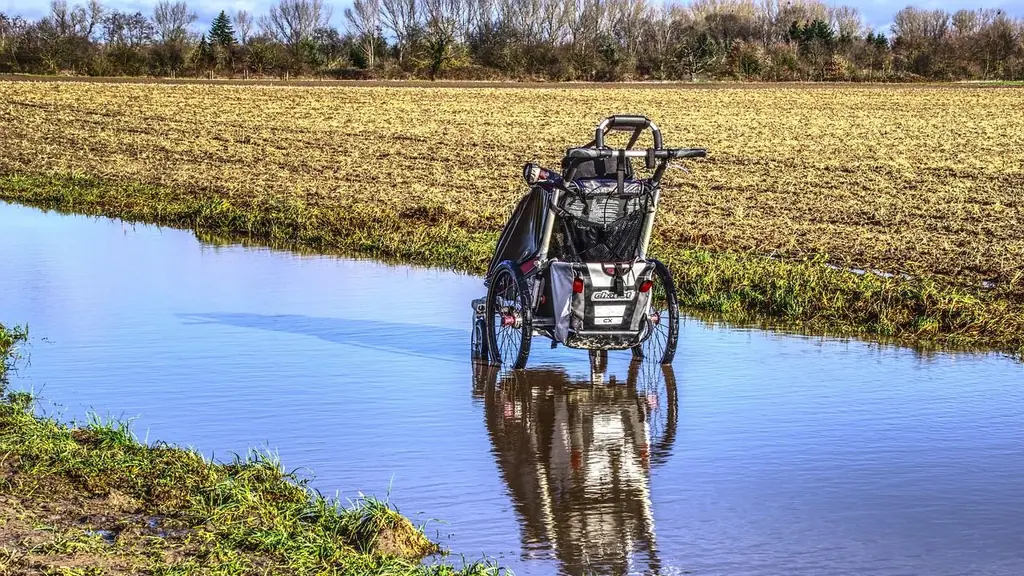
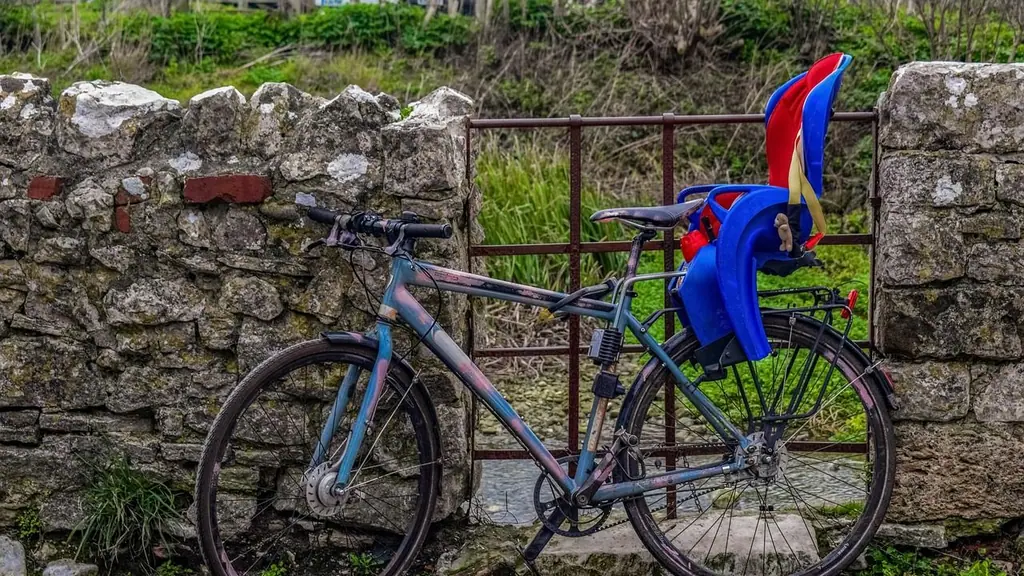
From about 12 months to 4 years, the AAP says a child may ride in a bicycle-towed trailer or a rear-mounted seat if they can sit well without support and their neck is strong enough to carry a lightweight helmet. When possible, the AAP prefers a trailer over a rear seat.
The same AAP page lists what a rear seat should have:
- Secure attachment over the rear wheel
- Spoke guards that keep hands and feet out of the wheel
- A high back
- A sturdy shoulder harness and lap belt that will hold a sleeping child
The AAP also notes that only adult cyclists should carry young passengers, that a passenger makes a bike less stable and lengthens braking distance, and that parks, bike paths and quiet streets are better choices than busy roads.
Two voluntary industry standards are worth knowing when you shop. ASTM F1625 covers rear-mounted child carriers for loads up to 40 lb (18 kg) and calls for features such as footrests, a backrest and guards against moving parts. ASTM F1975 covers nonpowered trailers designed to carry one or two children and includes rollover, tipover and coupling tests, plus requirements for flags and reflectors. Look for product documentation that states conformance, and follow the manufacturer’s age, weight and height limits.
Florida also has a rule here. Under Florida Statute 316.2065 (2026 Florida Statutes), a passenger who is under 4 years old or weighs 40 pounds or less must ride in a seat or carrier designed for a child of that age or size, and the rider may not leave a child in a seat or carrier when the rider is not in immediate control of the bicycle. Other states have their own rules, so check yours.
Helmets for every rider and passenger
Everyone in the family should wear a bicycle helmet on every ride. The U.S. Consumer Product Safety Commission’s helmet guide explains that bicycle helmets made after 1999 must meet the federal standard at 16 CFR part 1203, and that compliant helmets carry a label saying so. The CPSC also advises replacing a bicycle helmet after a crash even when no damage is visible, avoiding novelty or toy helmets, and never letting children wear helmets on playgrounds or while climbing trees, where a chin strap can become a strangulation hazard.
In Florida, the same statute requires riders and passengers under 16 to wear a properly fitted and fastened helmet that meets the federal standard. Fit matters as much as the helmet itself; our article on teaching children bicycle safety walks through a step-by-step fit check, and our guide to essential family cycling equipment covers what to look for when buying.
The bridge years: tag-alongs and first bikes
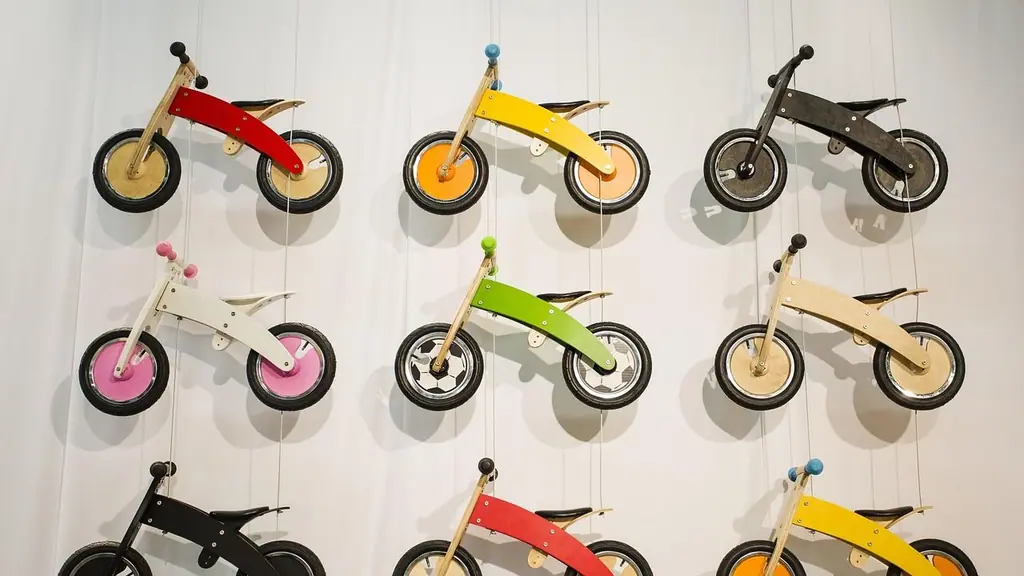
Between riding as a passenger and pedaling alone, many families use a tag-along (a one-wheeled trailer bike that attaches to an adult’s bike) or move straight to a balance bike or small pedal bike. We could not find pediatric or federal guidance that sets an age for tag-alongs, so treat the manufacturer’s limits as the minimum standard and judge readiness yourself. A child on a tag-along needs to hold on, stay seated and follow instructions for the whole ride, and the adult rider needs to be comfortable handling a longer, heavier combination.
For a child’s own first bike, fit is the priority. The AAP’s bicycle safety myths and facts page says a child should be able to sit on the seat with hands on the handlebars and both feet flat on the ground, that a first bike should have foot (coaster) brakes, and that buying a bike to grow into is a mistake because an oversized bike is harder to control. Our guide to choosing a bicycle for children covers wheel sizes and fit in detail.
Riding together: building skills before traffic
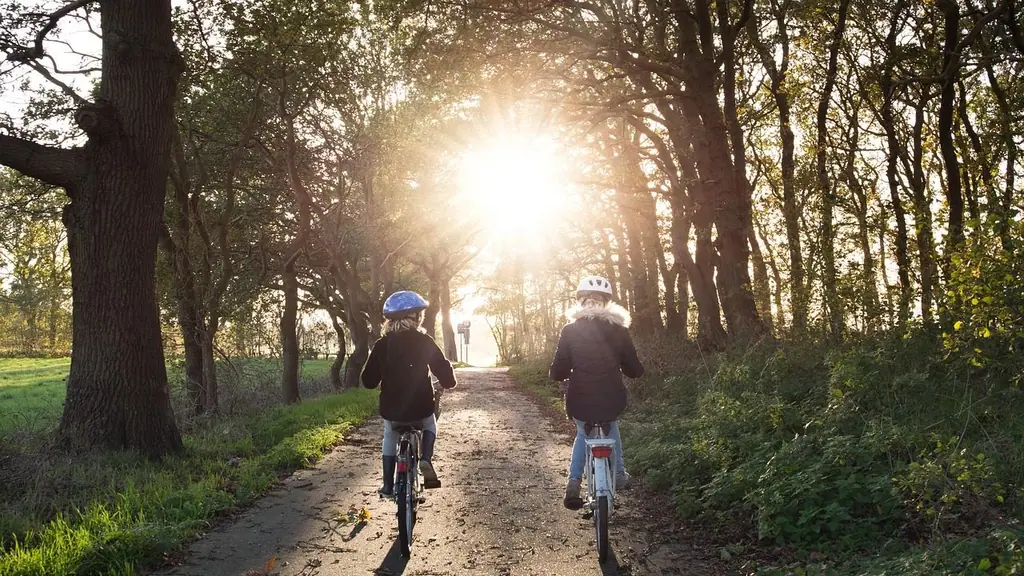
Once a child is pedaling, the work shifts to skills and judgment. NHTSA’s bicycle safety guidance recommends starting in a place away from traffic, such as a park, path or empty parking lot, and building confidence before riding on the road. A sensible progression looks like this:
- Starting, stopping and riding in a straight line without wobbling
- Looking back over a shoulder while keeping the bike steady
- Giving hand signals with one hand on the bars
- Riding on paths and quiet residential streets with an adult alongside or just behind
- Practicing the specific routes the family uses most, such as the trip to school or the park
The AAP adds three rules that matter for children in particular: ride on the right side, with traffic; obey stop signs and signals; and do not ride at dusk or after dark. The Federal Highway Administration’s Bicycle Safer Journey videos, organized for ages 5 to 9, 10 to 14 and 15 to 18, can help start these conversations at home.
Toward independent riding
There is no universal age at which a child is ready to ride without an adult. Readiness depends on the child’s skills, the route and the traffic on it. Many families move in small steps: riding a familiar route while a parent follows at a distance, then riding with a friend, then riding alone on short trips. Programs such as Safe Routes to School can help families find safer routes and organize group rides.
Before any ride, a quick check of brakes, tires and the helmet helps; our interactive pre-ride safety checklist is a handy routine for parents and children to do together.
Key takeaways
- The AAP says babies under 12 months should not be carried on a bicycle in any seat, trailer or carrier.
- From about 12 months to 4 years, a trailer (preferred by the AAP) or a well-designed rear seat is appropriate only when the child sits unsupported and can wear a lightweight helmet.
- Every rider and passenger needs a CPSC-compliant helmet that fits; Florida requires one for anyone under 16.
- Choose a first bike that fits now, with coaster brakes, and practice away from traffic before street riding.
- Children should not ride at dusk or after dark, and independence should grow gradually, route by route.
Questions readers ask
Should a toddler wear a helmet in a bike trailer?
Yes. The American Academy of Pediatrics says a child passenger should always wear a lightweight bicycle helmet that meets the CPSC standard, whether in a rear seat or a trailer. In Florida, the bicycle statute also requires helmets for riders and passengers under 16.
Is it safe for children to ride at dusk if their bike has lights?
Pediatric guidance says no. The AAP advises that children should not ride at dusk or after dark, and that reflectors or reflective clothing do not make night riding safe for them.
How do I know my child is ready to ride in the street?
There is no single age. A useful test from the AAP is whether your child can give hand signals without wobbling or swerving; a child who cannot should not ride in the street. Practice on paths and quiet streets with an adult first.
Sources
- How to Protect Child Passengers on Adult Bikes, American Academy of Pediatrics (HealthyChildren.org) (2022).
- Bicycle Safety for Children: Myths & Facts, American Academy of Pediatrics (HealthyChildren.org) (2026).
- Florida Statutes 316.2065, Bicycle regulations, Florida Legislature (2026).
- Which Helmet for Which Activity? (Publication 349), U.S. Consumer Product Safety Commission (2026).
- Bicycle Safety, NHTSA (2026).
- ASTM F1625-00(2026) Standard Specification and Test Method for Rear-Mounted Bicycle Child Carriers, ASTM International (2026).
- ASTM F1975-15(2023) Standard Specification for Nonpowered Bicycle Trailers Designed for Human Passengers, ASTM International (2023).
- Bicycle Safer Journey, Pedestrian and Bicycle Information Center / FHWA (2026).
Green Mobility Network is an independent publication. This article is for general information and is not legal, medical or professional advice; rules differ by state and city. Spotted an error? Read our corrections policy and write to contact@greenmobilitynetwork.org.