Safe Routes to School explained: history, the 6 Es and Florida
Since 2005, Safe Routes to School has funded safer crossings, sidewalks and education so more children can walk and bike to school. Here is how it works.
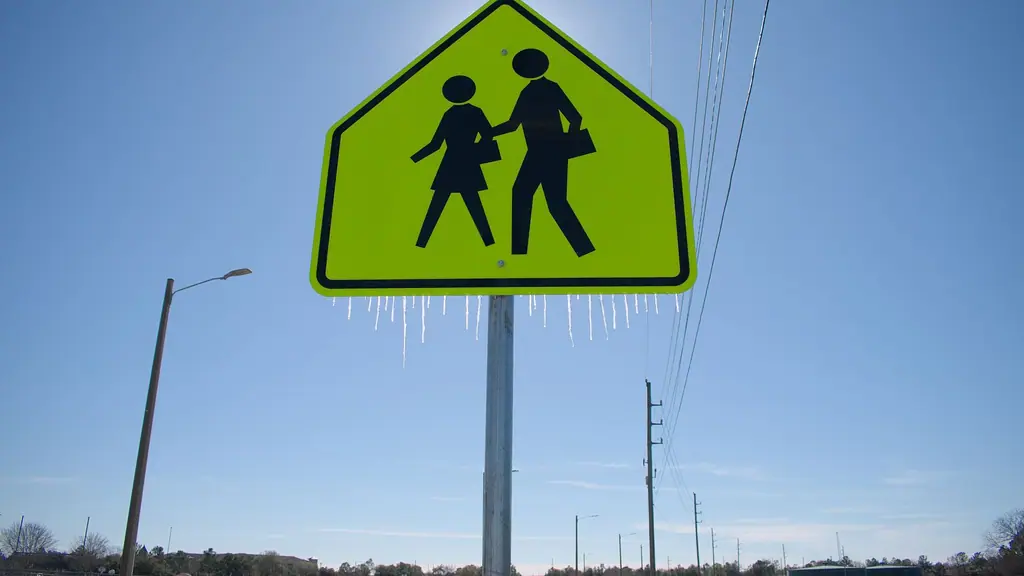
Safe Routes to School (SRTS) is an approach, and in the United States a funding program, aimed at making it safer and more appealing for children to walk and bicycle to school. It combines physical changes such as sidewalks and crossings with education, encouragement and evaluation. This explainer covers where the idea came from, how the federal program evolved, the “6 Es” framework, and how Florida runs its program.
Why it exists
Travel to school has changed dramatically within living memory. A 2011 report from the National Center for Safe Routes to School, How Children Get to School, drew on national travel surveys and found that 48 percent of students in kindergarten through eighth grade usually walked or bicycled to school in 1969, compared with 13 percent in 2009. The same report estimated that in 2009, personal vehicles taking K-12 students to school accounted for 10 to 14 percent of personal vehicle trips during the morning peak.
The Federal Highway Administration’s Safe Routes to School page notes that fewer than 15 percent of school trips are now made on foot or by bike, and links that decline to congestion and air quality problems around schools as well as to health risks associated with inactivity.
A short history
According to the Safe Routes Partnership’s history of the movement, the idea traces back to Odense, Denmark, in the 1970s, where the city redesigned streets and slowed traffic after too many children were injured on the way to school. Similar programs spread to other countries. In the United States:
- 1997: The first U.S. program began in the Bronx in New York City, and Florida piloted its own program later that year.
- 2000: Congress funded two pilot projects through NHTSA.
- 2005: Congress created the federal Safe Routes to School Program in the transportation law known as SAFETEA-LU.
- 2012: Federal SRTS funding was combined with other walking and bicycling programs into the Transportation Alternatives Program.
- 2021: The Infrastructure Investment and Jobs Act codified SRTS in federal law at 23 U.S.C. 208.
The 2005 federal program
FHWA’s SAFETEA-LU fact sheet lays out the original design. Annual authorizations rose from $54 million in 2005 to $183 million in 2009, a total of $612 million over those five years. The program covered kindergarten through eighth grade and projects within about 2 miles of schools. States had to fund a full-time SRTS coordinator and spend between 10 and 30 percent of their funds on non-infrastructure activities such as education and training. The law also funded a national clearinghouse and created a national task force.
After 2012
The Safe Routes Partnership reports that folding SRTS into the Transportation Alternatives Program in 2012 came with an overall 30 percent reduction in federal funding for SRTS, walking and bicycling. Today, according to FHWA, SRTS projects are eligible under the Transportation Alternatives Set-Aside and the Surface Transportation Block Grant Program, and the 2021 infrastructure law expanded eligibility from K-8 to K-12.
Who supports SRTS nationally
Two organizations are often mentioned together, and they play different roles.
The National Center for Safe Routes to School is based at the University of North Carolina Highway Safety Research Center. Its about page explains that it was established in 2006, when the center was selected to serve as FHWA’s SRTS clearinghouse, a role it held for about a decade. It continues to publish data, guidance and tools.
The Safe Routes Partnership is a national nonprofit founded in 2005, initially hosted by another organization, that became an independent organization in 2013. It focuses on policy, technical assistance and advocacy, and it now promotes safe routes to parks, libraries and other everyday destinations as well as schools.
The 6 Es
SRTS programs are commonly organized around six complementary approaches. The Safe Routes Partnership’s current 6 E’s framework is summarized below.
| E | What it means | Examples |
|---|---|---|
| Engagement | Listening to students, families, school staff and neighbors from the start | Parent surveys, student input, community meetings |
| Equity | Making sure benefits reach students who face the most barriers, including students with disabilities and low-income students | Prioritizing schools and neighborhoods with the greatest need |
| Engineering | Physical changes that make walking and biking safer and easier | Sidewalks, crossings, traffic calming, bike parking |
| Encouragement | Making walking and biking fun and normal | Walking school buses, bike trains, events and challenges |
| Education | Teaching safe walking and biking, and reminding drivers to watch for children | Bike skills classes, pedestrian safety lessons |
| Evaluation | Tracking how students travel and what works | Travel tallies, before-and-after counts, parent surveys |
Older materials list “enforcement” among the Es. In June 2020, the Safe Routes Partnership announced it had dropped enforcement from its framework, citing the inequitable impacts of policing on people of color, and made engagement the first E. Some state programs still use earlier versions, so you may see both.
Safe Routes to School in Florida
The Florida Department of Transportation runs the state’s program. Its SRTS page describes the goal as removing barriers to walking and bicycling to school, whether those are missing or unsafe infrastructure or a lack of education and encouragement programs, and as improving safety while reducing traffic, fuel use and air pollution near schools. Florida’s program covers kindergarten through high school, including children with disabilities.
FDOT operates an infrastructure grant program. As of the 2026-27 cycle shown on its website, applications are accepted from September 30 to January 31, and applicants must complete a required webinar hosted through Florida’s Local Technical Assistance Program. FDOT encourages schools, local transportation officials and other qualified groups to cooperate on applications. Families in Miami-Dade, Broward and elsewhere in the state can ask their school or local government whether a project is planned or underway.
What a local program can look like
No two SRTS programs are identical, but many follow a similar path. A school or district forms a small team that might include a principal, parents, a crossing guard supervisor, city or county transportation staff and, where possible, students. The team gathers information on how children currently travel, often through classroom travel tallies and parent surveys, and walks or rides the routes around the school to note problems such as missing sidewalk links, long crossings, faded markings or speeding.
From there, the team builds a plan that mixes quick wins with longer-term projects. Quick wins might include bike parking, education sessions, or a regular walking or biking day. Larger engineering projects, such as new sidewalks or crossing improvements, usually need grant funding and take longer to design and build. Repeating the travel tallies later shows whether anything has changed.
Beyond the school gate
SRTS has also influenced street design around schools. A 2020 information brief on school streets from the Pedestrian and Bicycle Information Center describes limiting or closing streets next to schools to motor vehicles, temporarily or permanently, to create room for children to walk, bike and play, with potential benefits for safety and air quality. Our article on creating bicycle-friendly communities for children looks at these design tools in more depth, and what are complete streets? explains the broader policy approach.
How families can get involved
- Ask your school whether it has an SRTS team or participates in a local program.
- Walk or ride the route to school with your child and note crossings, missing sidewalks and speeding.
- Offer to help with a walking school bus or bike train, where adults accompany a group of children along a set route.
- Share observations with your city, county or school district, and ask whether SRTS funding could help.
- Teach your child the skills in our guide to teaching children bicycle safety.
Key takeaways
- Safe Routes to School combines infrastructure, education and encouragement to help children walk and bike to school safely.
- The federal program began in 2005 under SAFETEA-LU, with $612 million authorized for 2005 to 2009, and is now codified at 23 U.S.C. 208.
- The Safe Routes Partnership’s 6 Es are engagement, equity, engineering, encouragement, education and evaluation; enforcement was dropped in 2020.
- The National Center for Safe Routes to School (UNC) and the Safe Routes Partnership are separate organizations with different roles.
- FDOT runs Florida’s K-12 program, including infrastructure grants with an annual application window.
Questions readers ask
Is Safe Routes to School only for elementary schools?
No. The original 2005 federal program focused on kindergarten through eighth grade, but FHWA says the Infrastructure Investment and Jobs Act expanded eligibility to kindergarten through 12th grade. Florida's program also covers K through high school.
Can parents start a Safe Routes to School program?
Parents often help, but funded projects usually involve schools and local governments. A practical first step is to contact your school and your state or regional Safe Routes coordinator, then join or organize a walk or bike audit of routes near the school.
Sources
- History of Safe Routes to School, Safe Routes Partnership (2026).
- SAFETEA-LU Fact Sheet: Safe Routes to School, FHWA (2005).
- Safe Routes to School, FHWA (2026).
- About the National Center for Safe Routes to School, National Center for Safe Routes to School (UNC Highway Safety Research Center) (2026).
- The 6 E's of Safe Routes to School, Safe Routes Partnership (2026).
- Dropping Enforcement from the Safe Routes to School 6 E's Framework, Safe Routes Partnership (2020).
- How Children Get to School: School Travel Patterns From 1969 to 2009, National Center for Safe Routes to School (2011).
- Safe Routes to School (SRTS), Florida Department of Transportation (2026).
- Re-envisioning School Streets: Creating More Space for Children and Families, Pedestrian and Bicycle Information Center (2020).
Green Mobility Network is an independent publication. This article is for general information and is not legal, medical or professional advice; rules differ by state and city. Spotted an error? Read our corrections policy and write to contact@greenmobilitynetwork.org.