Choosing a bicycle for children: fit, brakes and wheel size
A bike that fits is easier to control, and a bike that is easier to control is safer. Size by the child's body, not their age or the box label.
Children’s bikes are usually sold by wheel size, and wheel sizes are often marketed by age. Neither tells you whether a particular bike fits a particular child. Two children of the same age can differ a lot in height and leg length, and two bikes with the same wheel size can have quite different seat heights and frame shapes.
This guide explains how to judge fit, what to look for in brakes and weight, and which federal rules already apply to the bikes on the shelf.
Why fit comes first
NHTSA’s bicycle safety guidance puts it simply: ride a bike that fits, because one that is too big is harder to control. The American Academy of Pediatrics makes the same point in its bicycle safety myths and facts, warning that buying a bike for a child to grow into is especially risky because the child may not have the skill to handle it.
For a first bike, the AAP’s fit test is that a child can sit on the seat with hands on the handlebars and both feet flat on the ground. That conservative standard lets a beginner stop and steady the bike instantly, which matters more than pedaling efficiency at this stage.
Measure the child, then check the bike
Instead of relying on age labels, measure your child’s inseam and compare it with the bike’s actual dimensions.
- Have your child stand against a wall in the shoes they will ride in.
- Place a hardcover book between their legs, spine up, and raise it gently until it sits where a saddle would.
- Measure from the floor to the top of the spine. That is the inseam.
- Compare the inseam with the bike’s minimum seat height and standover height, which reputable manufacturers publish.
For a beginner, the seat at its lowest setting should let the child put both feet flat on the ground, per the AAP test. When standing over the frame, the child should be able to straddle it with feet flat and some clearance. If you can, bring the child to try the bike in person.
We have not reproduced an inseam-to-wheel-size chart here because published charts differ from one manufacturer to another and overlap considerably. Use the specific bike’s seat height as your guide.
Typical stages and wheel sizes
The table below shows how children’s bikes are commonly grouped. Treat the wheel sizes as rough categories; the fit checks in the right-hand column are what actually matter.
| Stage | Common wheel sizes | Fit checks |
|---|---|---|
| Balance bike (no pedals) | Small wheels, often 12 inches | Seated with both feet flat and knees slightly bent; child can walk and glide comfortably |
| First pedal bike | Often 14 or 16 inches | Both feet flat on the ground when seated (AAP); coaster brake; easy to lift and steer |
| Confident young rider | 20 inches | Can start and stop smoothly; hands reach brake levers easily if fitted |
| Older child | 24 inches | Comfortable reach to bars; controlled stopping with hand brakes; gears used sensibly |
| Teen or small adult frame | 26 inches or adult sizes | Fitted like an adult bike: standover clearance and proper saddle height |
Balance bikes and training wheels
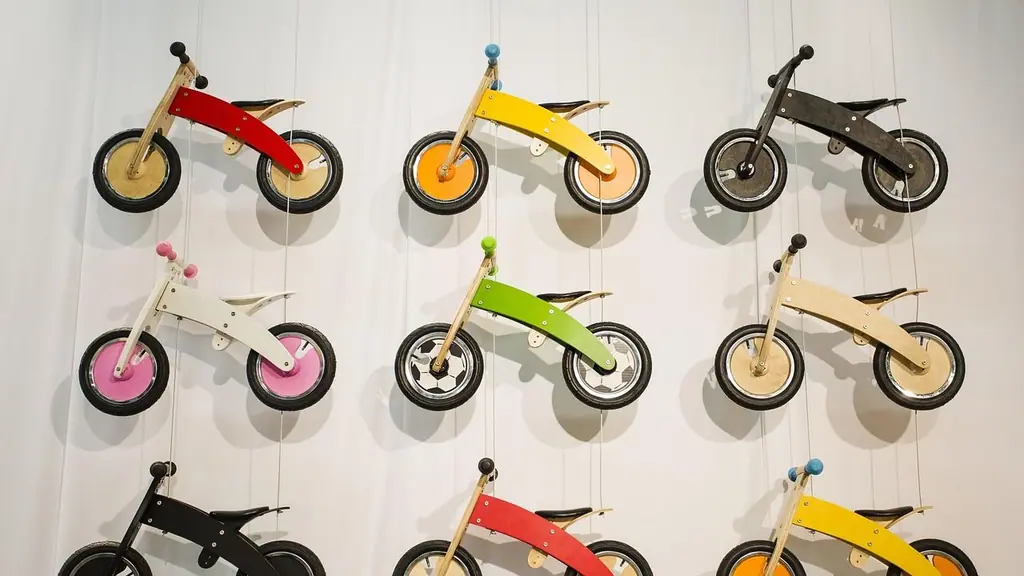
A balance bike has no pedals or drivetrain. The child sits and pushes along with their feet, then lifts them to glide as balance improves. Because a child on a balance bike can put both feet down at any moment, it is an approachable way to learn steering and balance before adding pedaling.
Training wheels are another option, though they teach pedaling before balance. Either approach can work. The essentials are the same: a bike that fits, a helmet on every ride, and practice in a park, path or empty lot away from traffic, as NHTSA recommends.
Coaster brakes versus hand brakes
The AAP recommends that a child’s first bike have foot brakes, often called coaster brakes, which engage when the rider pedals backward. Hand brakes require hand strength and coordination that many young children have not yet developed.
Federal rules reflect this. Under the CPSC’s bicycle requirements at 16 CFR part 1512 (as of 2026), a “sidewalk bicycle” is one whose seat height is no more than 25 inches (635 mm) at its highest setting. Sidewalk bicycles may not rely on hand brakes alone, and those with a seat height of 22 inches (560 mm) or more at the lowest setting must have a foot brake. The rule also limits the distance between hand brake levers and the handlebar on sidewalk bicycles to 3 inches (76 mm), compared with 3.5 inches (89 mm) on larger bikes, so small hands can reach.
When your child moves to a bike with hand brakes, check that:
- Each lever can be reached and squeezed firmly without stretching
- The child knows which lever controls which wheel
- They can stop smoothly and in a straight line on demand, on flat ground first
Weight, gears and other details
Weight. A lighter bike is easier for a small child to lift, steer, push uphill and pick up after a tip-over. Compare bikes by lifting them yourself and watching your child handle them.
Gears. Single-speed bikes keep things simple for young riders. Gears become useful on longer rides and hills, once a child can shift while still watching the path ahead.
Reflectors. Under 16 CFR 1512, regular bicycles must come with front, rear, pedal and wheel-side reflectors, while sidewalk bicycles are exempt. Reflectors do not make night riding safe for children; the AAP advises that children should not ride at dusk or after dark.
Used bikes. Secondhand children’s bikes can be good value, but check the brakes, tires, chain and bolts carefully, and replace anything worn. Our pre-ride bicycle safety check covers what to inspect.
Buy the helmet at the same time
A new bike is a good moment to fit a helmet. The CDC’s helmet fact sheet recommends bringing the child along to check fit, measuring head circumference just above the eyebrows and ears, and checking each brand’s sizing chart because sizes vary. The CPSC’s helmet guide explains that bicycle helmets must meet the federal standard at 16 CFR part 1203 and carry a label saying so. Our guide to essential family cycling equipment goes into helmets, lights and locks in more detail.
A test-ride checklist
If you can try a bike before buying, a short test in a safe, open space tells you more than any chart. Watch for these signs:
- Your child can get on and off without help and without the bike tipping.
- Seated, they can steady the bike with their feet on the ground.
- They can reach the handlebars without locking their elbows or leaning far forward.
- They can steer through a gentle curve and stop on request, using whichever brake the bike has.
- They can push the bike, turn it around and pick it up if it falls.
If the bike passes on most points but not all, a seat or handlebar adjustment may fix it. If it fails several, try a smaller size or a different frame design.
Moving up a size
Children grow quickly, so revisit fit every few months. Signs that a bike is getting small include knees coming close to the handlebars, the seat raised to its maximum mark, or a cramped, hunched riding position. When it is time to move up, repeat the fit checks on the new bike rather than assuming the next wheel size will fit.
When your child is ready to ride beyond the driveway, our guides on teaching children bicycle safety and the broader parent’s guide to family cycling cover the next steps.
Key takeaways
- Size by your child’s inseam and the bike’s actual seat height, not by age or wheel size alone.
- For a first bike, the AAP’s test is both feet flat on the ground while seated with hands on the bars.
- Start with coaster brakes; federal rules require foot brakes on most small sidewalk bicycles.
- Lighter, simpler bikes are easier for young children to control.
- Never buy a bike to grow into, and fit a CPSC-certified helmet at the same time.
Questions readers ask
Does my child need a balance bike before a pedal bike?
No. A balance bike is one route to learning, not a requirement. What matters most is that whichever bike your child starts on fits well and is used in a safe place, away from traffic, with an adult nearby.
When can a child switch to hand brakes?
There is no set age. Hand brakes need enough hand size, strength and coordination to reach and squeeze the levers firmly, which pediatricians note young children often lack. Have your child demonstrate controlled stops before relying on hand brakes alone.
Do children's bikes have to meet a federal safety standard?
Yes. Bicycles sold in the United States are covered by the Consumer Product Safety Commission's requirements in 16 CFR part 1512, which include braking, reflector and construction rules, with specific provisions for small sidewalk bicycles.
Sources
- Bicycle Safety for Children: Myths & Facts, American Academy of Pediatrics (HealthyChildren.org) (2026).
- 16 CFR Part 1512, Requirements for Bicycles, U.S. Consumer Product Safety Commission (eCFR) (2026).
- Bicycle Safety, NHTSA (2026).
- Get a Heads Up on Bike Helmet Safety, CDC (2018).
- Which Helmet for Which Activity? (Publication 349), U.S. Consumer Product Safety Commission (2026).
Green Mobility Network is an independent publication. This article is for general information and is not legal, medical or professional advice; rules differ by state and city. Spotted an error? Read our corrections policy and write to contact@greenmobilitynetwork.org.