Essential family cycling equipment: helmets, seats and lights
The right gear makes family rides safer and simpler. Here is what to look for in each category, which standards apply and what Florida law requires.
Family cycling does not require a garage full of gear, but a few items do real safety work: helmets, lights, a way to carry young children, and a lock. This guide explains what to look for in each category, which standards and laws apply, and where the trade-offs lie. We describe product types only; we do not recommend brands or retailers.
Equipment at a glance
| Item | What to look for | Standard or rule |
|---|---|---|
| Helmet (every rider) | Snug, level fit; certification label; no added attachments | CPSC 16 CFR part 1203; Florida requires helmets under 16 |
| Front and rear lights | Bright white front light, red rear light | Florida: required between sunset and sunrise |
| Reflectors | Front, rear, pedal and wheel-side reflectors | Required on new bicycles under 16 CFR part 1512 |
| Rear child seat | High back, harness, spoke guards, secure mount | ASTM F1625 covers rear carriers up to 40 lb (18 kg) |
| Child trailer | Harness, flag, reflectors, secure hitch | ASTM F1975 covers trailers for one or two children |
| Lock | A sturdy lock sized for your bike and the places you park | No standard; choose for your risk |
| Bell | Clear, easy to reach | Florida sidewalk riders must give an audible signal before passing |
Helmets
Start here, for adults and children alike. The U.S. Consumer Product Safety Commission’s helmet guide explains that all bicycle helmets made after 1999 must meet the federal standard at 16 CFR part 1203, and that compliant helmets carry a label inside or on the strap. The CPSC also advises:
- Do not rely on a helmet’s name, look or packaging claims; check the certification label.
- Avoid novelty or toy helmets and helmets with protruding decorations.
- Do not add stickers, covers or attachments that did not come with the helmet.
- Replace a bicycle helmet after any crash, even with no visible damage, because the foam is designed to crush once.
- Without manufacturer guidance, consider replacing a helmet within 5 to 10 years of purchase.
For children, the CDC’s helmet fact sheet recommends bringing the child when you buy, measuring head size just above the eyebrows and ears, and checking the brand’s own sizing chart because sizes vary. It also suggests storing helmets indoors, away from heat and direct sunlight, rather than in a car.
Under Florida Statute 316.2065 (2026 Florida Statutes), riders and passengers under 16 must wear a properly fitted, securely fastened helmet that meets the federal standard. For a step-by-step fit check, see our guide to teaching children bicycle safety.
Lights and reflectors
Florida’s statute requires any bicycle in use between sunset and sunrise to have a front lamp showing white light visible from at least 500 feet, plus a rear lamp and reflector, each showing red, visible from 600 feet. Other states have their own rules. NHTSA’s bicycle safety guidance more broadly recommends a white front light, a red rear light and reflectors at night or whenever visibility is poor, along with bright clothing by day.
New bicycles already come with reflectors. The CPSC’s bicycle requirements (16 CFR part 1512, as of 2026) call for a front reflector, a red rear reflector, pedal reflectors and reflective devices on the sides of the wheels, although small sidewalk bicycles are exempt. Reflectors only work when a light shines on them, so they complement lights rather than replace them.
For children, lights are a backup for overcast days and unexpected delays, not permission to ride later. The American Academy of Pediatrics advises that children should not ride at dusk or after dark.
Carrying young children
The American Academy of Pediatrics’ guidance on child passengers says babies under 12 months should not be carried on a bicycle. From about 12 months to 4 years, a child who sits well unsupported and can hold up a lightweight helmet may ride in a trailer or rear-mounted seat, with the AAP preferring trailers where possible. Florida requires passengers under 4 or weighing 40 pounds or less to ride in a seat or carrier designed for a child of that age or size.
Rear-mounted child seats
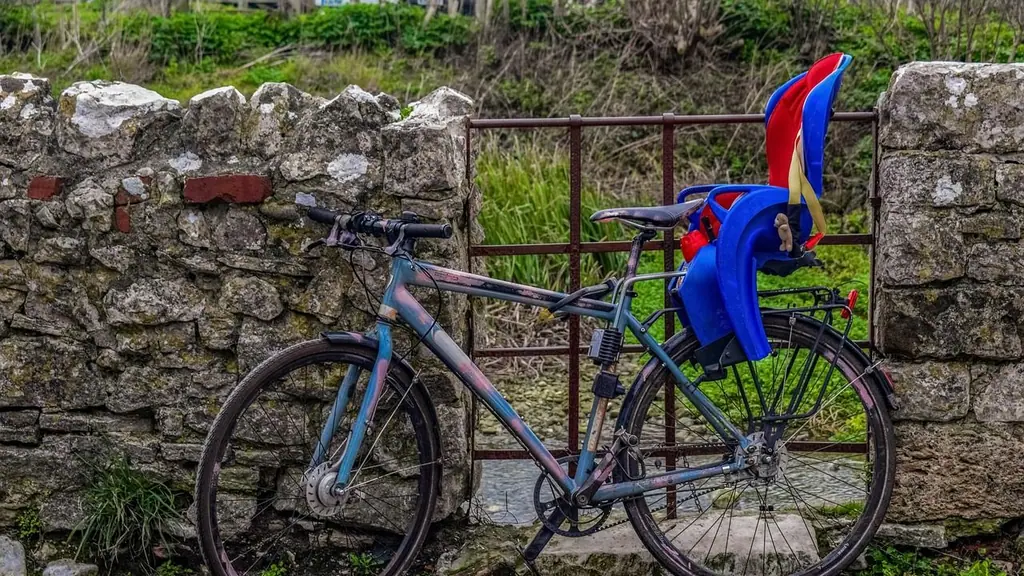
The AAP lists four features for a rear seat: secure attachment over the rear wheel, spoke guards, a high back, and a shoulder harness and lap belt sturdy enough for a sleeping child. The voluntary standard ASTM F1625 covers rear-mounted carriers for loads up to 40 lb (18 kg) and calls for footrests, a backrest, armrests, a rear reflector, guards that keep hands and feet away from moving parts, and a way to keep the child seated.
Check that the seat fits your bike’s frame and rack, and that your bike can safely take the extra weight. A loaded child seat raises the center of gravity, so practice mounting, starting and stopping before riding anywhere busy.
Trailers
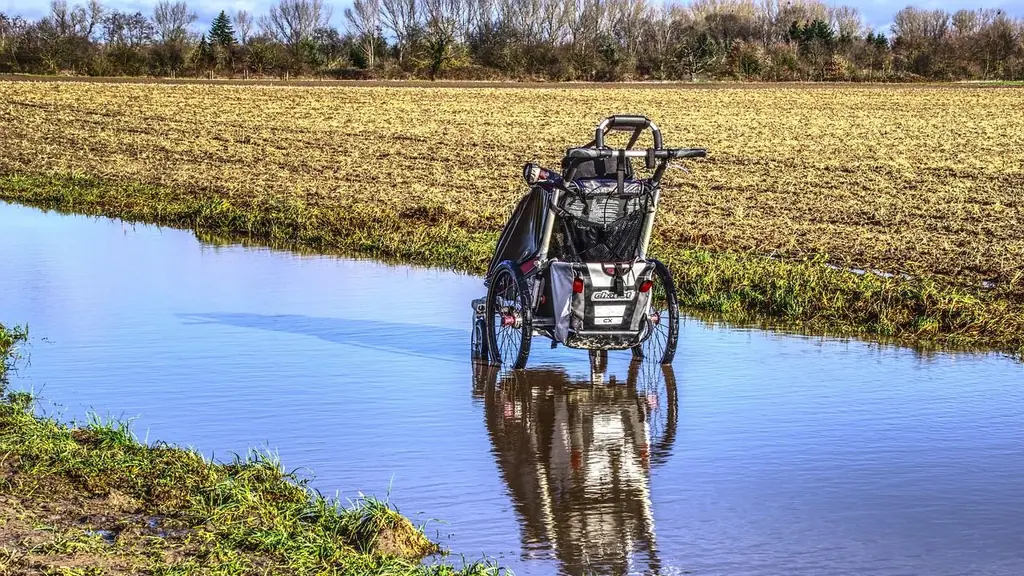
Child trailers sit low behind the bike on two wheels. The voluntary standard ASTM F1975 covers nonpowered trailers designed for one or two children and includes tests for strength, rollover, tipover resistance and hitch security, along with requirements for colors, reflectors and flags. Look for a secure harness for each child, a tall visibility flag and a hitch that locks securely. Trailers are wide, so plan routes with enough room.
Front-mounted seats
ASTM F1625 does not cover seats mounted in front of the rider, and the AAP page does not address them. If you consider one, follow the manufacturer’s age and weight limits strictly.
Tag-alongs
A tag-along, sometimes called a trailer bike, is a one-wheeled half-bike that attaches to an adult bike so an older child can pedal along. We did not find federal or pediatric guidance setting an age for them, so rely on the manufacturer’s limits, make sure your child can hold on and stay seated for a full ride, and practice in a quiet area first.
Cargo bikes
Cargo bikes are built to carry heavy loads, and many families use them to carry children. Common layouts include:
- Front-box bikes, with a cargo box between the rider and the front wheel, where children can sit facing forward
- Longtail bikes, with an extended rear rack that can be fitted with seats, footrests and handholds
- Cargo trikes, which add a third wheel for stability at low speeds
Many cargo bikes are electric-assist. Before buying, check the manufacturer’s passenger and weight limits, the seat and harness options, how the bike handles fully loaded, and where you will store it. If you choose an electric model, follow battery charging and storage guidance; our article on e-bike battery safety and storage covers the essentials.
Locks and other useful extras
A lock is part of everyday family riding, particularly if children ride to school. A sturdy lock that secures the frame to a fixed object is a reasonable baseline; lock wheels and accessories too, and record your bike’s serial number at home.
Other worthwhile items include:
- A bell, which also helps Florida sidewalk riders meet the requirement to give an audible signal before passing pedestrians
- A floor pump with a gauge, a spare tube and basic tools
- Water bottles and a small first-aid kit
- Mirrors for adults towing trailers
Our interactive pre-ride safety checklist helps make sure everything is in working order before you set off.
Key takeaways
- Every rider needs a helmet with a CPSC certification label; replace it after any crash.
- In Florida, bikes ridden between sunset and sunrise need a white front light and a red rear lamp and reflector; children should not ride after dark regardless.
- For children aged about 1 to 4, choose a trailer or a rear seat that meets ASTM F1625 or F1975 and has a proper harness; babies under 12 months should not ride.
- Follow manufacturer limits for tag-alongs, front seats and cargo bikes, where no pediatric guidance sets ages.
- A good lock, a bell and basic repair tools round out a family cycling kit.
Questions readers ask
How long does a bike helmet last?
Follow the manufacturer's guidance. Without it, the CPSC suggests replacing a helmet within 5 to 10 years of purchase, and immediately after any crash or if you see cracks, crushed foam, worn straps or missing pads.
Are reflectors enough for riding at night?
No. In Florida, bicycles used between sunset and sunrise need a white front light visible from at least 500 feet and a red rear lamp and reflector visible from 600 feet (2026 statutes). Pediatric guidance also says children should not ride at dusk or after dark.
Sources
- Which Helmet for Which Activity? (Publication 349), U.S. Consumer Product Safety Commission (2026).
- Get a Heads Up on Bike Helmet Safety, CDC (2018).
- How to Protect Child Passengers on Adult Bikes, American Academy of Pediatrics (HealthyChildren.org) (2022).
- ASTM F1625-00(2026) Standard Specification and Test Method for Rear-Mounted Bicycle Child Carriers, ASTM International (2026).
- ASTM F1975-15(2023) Standard Specification for Nonpowered Bicycle Trailers Designed for Human Passengers, ASTM International (2023).
- Florida Statutes 316.2065, Bicycle regulations, Florida Legislature (2026).
- 16 CFR Part 1512, Requirements for Bicycles, U.S. Consumer Product Safety Commission (eCFR) (2026).
- Bicycle Safety, NHTSA (2026).
Green Mobility Network is an independent publication. This article is for general information and is not legal, medical or professional advice; rules differ by state and city. Spotted an error? Read our corrections policy and write to contact@greenmobilitynetwork.org.