Electric scooters and sustainable urban transportation: the evidence
E-scooters can replace short car trips and extend transit, but their climate and safety record depends on how long they last, what trips they replace and how streets are designed.
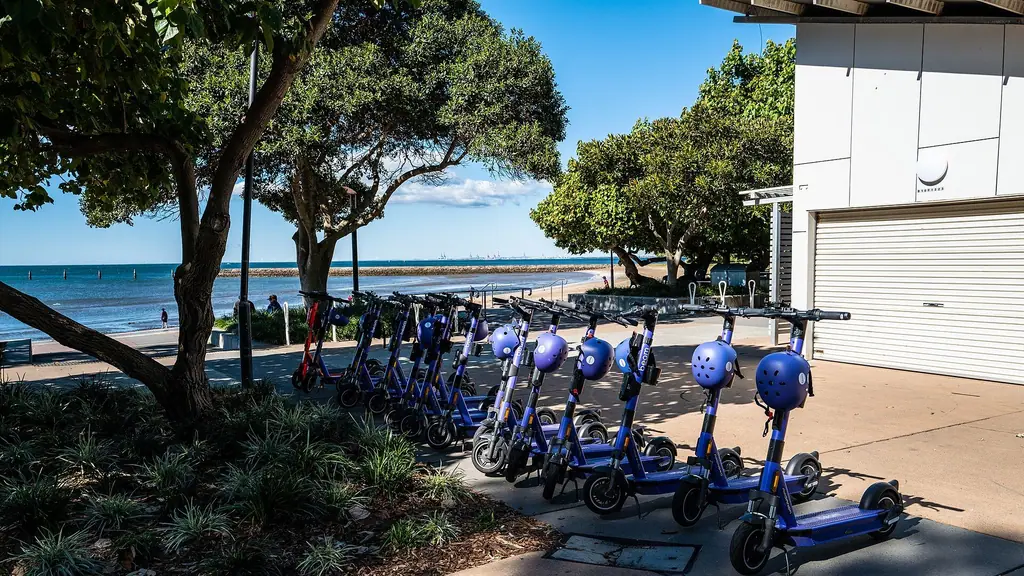
Since the first shared scooter systems launched in 2017, as the US Department of Energy notes, electric kick scooters have gone from novelty to everyday transportation in many US cities. They fill a gap between walking and driving: trips too long to walk comfortably but too short to justify a car. Whether they make cities greener and safer, though, depends on details that are easy to overlook.
This article looks at shared and privately owned e-scooters, what research says about their environmental footprint, what injury data shows, and how cities are handling sidewalk clutter.
How many people ride?
The National Association of City Transportation Officials (NACTO) tracks shared systems. Its 2023 snapshot, published in July 2024, found:
- People took 69 million trips on dockless shared e-scooters in the US and Canada in 2023, up about 15% from 58.5 million in 2022. That included 65 million trips in the US.
- About 40% of US dockless e-scooter trips happened in just 10 cities, led by Los Angeles, Washington DC and Denver.
- The typical e-scooter or dockless e-bike trip lasted 11 to 12 minutes.
- The average one-way shared e-scooter or dockless e-bike trip cost around $6.00 in 2023.
Shared systems also come and go. NACTO notes that San Diego, a busy scooter market in 2022, cut its permitted fleet after theft and vandalism, and all four permitted operators had left the city by November 2023.
Privately owned scooters are harder to count, because no operator reports their trips. That gap matters for policy, since owned scooters are used differently and last longer than many shared ones.
Shared versus owned
| Aspect | Shared e-scooters | Owned e-scooters |
|---|---|---|
| Upfront cost | None; pay per trip | Purchase price |
| Per-trip cost | Often several dollars (NACTO average about $6.00 in 2023) | Mostly electricity and maintenance |
| Availability | Depends on fleet size and rebalancing | Always with you, but must be stored and charged |
| Charging and maintenance | Done by the operator | Done by the owner, including battery safety |
| Environmental footprint | Sensitive to vehicle lifespan and collection trips | Sensitive to how long you keep it and what it replaces |
| Parking | Governed by city permits and operator rules | Same public-space rules; secure storage needed |
Most shared operators offer reduced fares for qualifying low-income riders, usually about half the regular trip cost, according to NACTO, which also notes that these programs serve only people with the lowest incomes.
What does the lifecycle research say?
The most cited US study is a 2019 lifecycle assessment by Hollingsworth, Copeland and Johnson in Environmental Research Letters, modeled on shared scooters in Raleigh, North Carolina. Its key findings:
- In the base case, shared e-scooters produced about 202 grams of CO2-equivalent per passenger-mile.
- Roughly half of that came from materials and manufacturing, and about 43% from the vehicles used to collect, charge and redistribute scooters. Electricity for charging was under 5%.
- Scooter lifespan was the most influential variable. Extending it to two years cut the average to about 141 grams per passenger-mile.
- Replacing a trip in an average personal car almost always produced a net reduction in emissions. Replacing a bus, bicycle or e-bike trip generally increased emissions.
So what a scooter trip replaces is crucial. Survey data compiled by the US Department of Energy (FOTW #1370, 2024) from the North American Bikeshare and Scootershare Association found that across North American shared micromobility systems (bikes and scooters combined), 37% of trips replaced a car trip, about 35% replaced walking, 13% replaced transit and 9% replaced a personal bike, with 5% being new trips.
The practical lessons for cities are clear: longer-lasting vehicles, more efficient charging and collection, and programs that target car trips rather than walking trips make e-scooters far greener. For an individual owner, keeping one scooter for years and using it instead of a car does the same.
What does the safety data show?
The U.S. Consumer Product Safety Commission’s 2026 micromobility report covers 2017 through 2024:
- An estimated 380,000 e-scooter injuries were treated in US emergency departments over those eight years, including about 79,300 in 2024.
- CPSC staff were aware of 206 e-scooter deaths from 2017 through 2024. Motor vehicle crashes and control issues were the top hazards.
- In a 2024 follow-up study of emergency department cases, rental scooters accounted for 35% of e-scooter injuries.
- 54% of those injuries happened on paved roads and 32% on sidewalks.
- Only 18% of injured riders were wearing a helmet, and 32% were carrying something while riding.
Fire is a separate risk for owned scooters. CPSC’s in-depth investigations of e-scooter incidents found fire hazards were the most common problem reported, and New York City now requires e-scooters sold there to be certified to UL 2272, according to its Department of Consumer and Worker Protection. Our guide to battery safety and storage applies to scooter batteries too.
Riding more safely
- Wear a helmet; the CPSC data shows most injured riders did not.
- Keep both hands on the handlebar and carry bags in a backpack, not dangling from the bar.
- Use lights and reflective gear at night, and slow down on rough or wet pavement.
- Ride in bike lanes where available and allowed, and yield to people walking.
- Check brakes, tires and the stem latch before riding, whether the scooter is yours or rented.
Parking and sidewalk clutter
Scooters left across sidewalks are one of the most visible complaints, and they matter most for wheelchair users, people with low vision and parents with strollers. The evidence is more nuanced than the complaints suggest.
A study led by Anne Brown at the University of Oregon, reported by the Cornell Chronicle in 2020, observed parking in Austin, Portland, San Francisco, Santa Monica and Washington DC. Only 0.8% of 865 scooter and bike observations were improperly parked, compared with 24.7% of 2,631 motor vehicles. One co-author worked for a scooter operator, which readers may weigh accordingly.
A 2022 Portland study in the Journal of Transport and Land Use used stricter criteria, checking each scooter against the city’s detailed parking rules. It found 76% failed at least one requirement, though compliance was significantly higher on blocks with designated scooter parking. The authors recommend prioritizing dedicated parking where sidewalk space is tight.
Taken together, the research points to design rather than bans: marked parking areas, corrals in the curb lane and clear rules enforced through operator permits.
The legal picture in Florida
As of 2025, Florida law treats e-scooters much like bicycles:
- Florida Statute 316.003 defines a motorized scooter as a device with no more than three wheels that cannot exceed 20 mph (32 km/h) on level ground.
- Florida Statute 316.2128 gives riders the rights and duties of bicyclists, with some exceptions, and exempts them from driver licensing, registration and insurance requirements.
- The same statute lets counties and cities regulate where scooters operate, including sidewalks, and set minimum ages.
- Companies renting scooters must secure them in areas under an active tropical storm or hurricane warning, a detail that matters in South Florida.
Rules differ by city, so check local ordinances before riding.
Where scooters fit in a sustainable city
E-scooters work best as one piece of a larger network. They extend the reach of transit for the first and last mile, as our guide to cycling and public transit explores, and they rely on the same protected lanes and slow streets that make cycling safe. For a broader look at shared bikes and scooters, see how micromobility is changing cities.
Key takeaways
- US riders took about 65 million shared e-scooter trips in 2023, according to NACTO, mostly short trips of 11 to 12 minutes.
- Lifecycle research shows shared scooters are only clearly greener when they last longer and replace car trips rather than walking, cycling or transit.
- CPSC estimated about 79,300 e-scooter emergency department visits in 2024; most injured riders were not wearing helmets.
- Designated parking improves compliance; studies suggest cars obstruct access far more often than scooters do.
- In Florida (as of 2025), scooter riders have bicyclists’ rights and duties, and local governments set many of the rules.
Questions readers ask
Are e-scooters better for the climate than cars?
When an e-scooter trip replaces a car trip, research generally finds a net emissions reduction. When it replaces walking, cycling or a bus ride, it can increase emissions, especially for short-lived shared scooters.
Can I ride an e-scooter on the sidewalk in Florida?
It depends on where you are. As of 2025, Florida Statute 316.2128 gives scooter riders the rights and duties of bicyclists and lets local governments regulate sidewalk use, so check your city or county rules.
Do I need a license to ride an e-scooter in Florida?
No. As of 2025, Florida law does not require a driver license, registration or insurance for motorized scooters or micromobility devices, though local governments may set minimum ages.
Sources
- Shared Micromobility in the U.S. and Canada: 2023, NACTO (2024).
- Are e-scooters polluters? The environmental impacts of shared dockless electric scooters, Environmental Research Letters (2019).
- Micromobility Products-Related Deaths, Injuries, and Hazard Patterns: 2017-2024, U.S. Consumer Product Safety Commission (2026).
- FOTW #1370, November 25, 2024: In North America, 37% of Shared Micromobility Trips Replaced a Car Trip, U.S. Department of Energy (2024).
- Study explores micromobility, improper parking in 5 cities, Cornell Chronicle (2020).
- Congested sidewalks: The effects of the built environment on e-scooter parking compliance, Journal of Transport and Land Use (2022).
- FOTW #1366, October 28, 2024: Shared Micromobility Ridership was Evenly Split between Scooters and Bikes in 2023, U.S. Department of Energy (2024).
- Florida Statutes 316.2128, Micromobility devices, motorized scooters, and miniature motorcycles, The Florida Senate (2025).
- Florida Statutes 316.003, Definitions, The Florida Senate (2025).
- Micromobility Devices and Batteries, NYC Department of Consumer and Worker Protection (2024).
Green Mobility Network is an independent publication. This article is for general information and is not legal, medical or professional advice; rules differ by state and city. Spotted an error? Read our corrections policy and write to contact@greenmobilitynetwork.org.