Electric bicycle motor types explained: hub, mid-drive and sensors
Where the motor sits and how it senses your pedaling shape how an e-bike feels, climbs, wears and gets serviced. Here is what the terms mean in practice.
Two e-bikes with the same battery and similar power ratings can feel completely different to ride. Much of that difference comes down to where the motor is mounted and how the bike decides how much help to give. This guide explains the main motor layouts, the sensors that control them, and how US e-bike classes relate to motor design.
The two main layouts
An engineering overview from ASME (2025) describes the two dominant designs: hub motors built into a wheel hub, and mid-drive motors mounted at the crank where the pedals attach.
Hub motors
A hub motor sits inside the center of a wheel, most commonly the rear. It drives the wheel directly, separate from the bike’s chain and gears. ASME notes two variants:
- Geared hub motors have internal gears between the motor and the wheel.
- Direct-drive hub motors have no internal gearing; the motor’s rotation is the wheel’s rotation.
Because the motor works independently of the drivetrain, it does not add motor torque to the chain. On the other hand, it puts extra weight in one wheel, and removing that wheel for a flat usually means disconnecting a motor cable.
Mid-drive motors
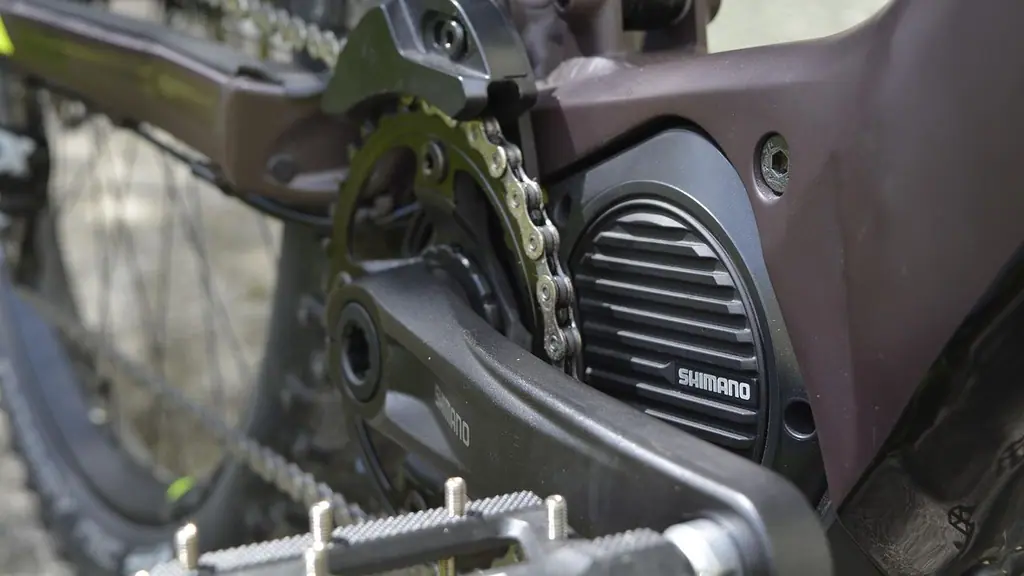
A mid-drive motor is mounted at the bottom bracket and drives the crank, so its power flows through the chain and the bike’s gears. ASME describes mid-drives as the most popular design and notes their central location gives better balance and weight distribution.
Working through the gears means the motor can operate in a more efficient range when you shift down for a hill, much as your legs do. The trade-off is drivetrain load: Consumer NZ’s maintenance guide (2026) notes that e-bike chains carry higher forces, so chains and sprockets tend to need replacing sooner.
Side-by-side comparison
| Feature | Hub motor | Mid-drive motor |
|---|---|---|
| Location | Inside the wheel hub, usually rear | At the crank, between the pedals |
| Uses the bike’s gears | No | Yes |
| Weight distribution | Concentrated in one wheel | Central and low |
| Hill climbing | Adequate to good, depends on design | Generally strong, aided by gearing |
| Drivetrain wear | Lower motor load on chain | Higher load on chain and cassette |
| Flat-tire repair | More involved on the motor wheel | Similar to a regular bike |
These are general tendencies, not rules. A well-integrated hub system can feel better than a poorly tuned mid-drive, so test-ride if you can.
How the bike knows when to help: sensors
The motor controller decides how much power to send based on sensor input. ASME describes the two main approaches:
- Cadence sensors detect that the pedals are turning (and how fast). Once you pedal, the controller supplies assistance at a level tied to the selected assist mode. Because it responds to pedal movement rather than effort, the help may not track how hard you are actually pushing.
- Torque sensors measure how hard you push on the pedals and scale motor output to match. Push harder and you get more help; ease off and the motor backs off. Many riders find this feels more like a naturally strong pair of legs.
Controllers often combine inputs: the ASME article describes a controller reading both torque and cadence sensors, and every system also needs road speed to cut assistance at its class limit. Motor torque, measured in newton-meters (Nm), describes pulling power at low speed; the author of the ASME piece described his own motor’s 50 Nm rating as moderate.
Pedal assist and throttles
A 2022 review in the journal Energies from the University of Padova divides e-bike systems into two typologies: pedal-assist systems, where the motor helps only while you pedal, and power-on-demand systems, where a throttle can drive the bike without pedaling. In the US, that distinction is built into the e-bike class system.
Where US law fits in
The federal definition
Federal consumer product law defines a low-speed electric bicycle as a two- or three-wheeled vehicle with fully operable pedals and an electric motor of less than 750 watts, whose motor-only top speed on level pavement is under 20 mph (32 km/h) with a 170-pound rider. The CPSC cites that definition in its 2026 micromobility report. The federal definition covers product safety; where and how you may ride is set by state and local law.
The three-class system
Many states use a three-class system. Florida’s version, in Florida Statute 316.003 (as of 2025), works like this:
| Class | How the motor assists | Assistance stops at |
|---|---|---|
| Class 1 | Only while the rider pedals | 20 mph (32 km/h) |
| Class 2 | Can propel the bike without pedaling (throttle) | 20 mph (32 km/h) |
| Class 3 | Only while the rider pedals | 28 mph (45 km/h) |
In all three Florida classes the motor must be under 750 watts, and the bike must have operable pedals. Under Florida Statute 316.20655, manufacturers must attach a label showing the class, top assisted speed and motor wattage, and the motor must disengage when the rider stops pedaling or applies the brakes. The same statute lets local governments restrict e-bikes on paths, trails and sidewalks. Other states differ, so check your state’s statutes and local ordinances.
Note what the class system does and does not regulate. Class depends on assisted top speed and on whether a throttle can propel the bike, not on whether the motor is a hub or a mid-drive. Either layout can be built as Class 1, 2 or 3.
Safety, certification and modifications
The motor and controller are part of the electrical system covered by UL 2849, the standard for e-bike electrical systems. UL Solutions lists motors, motor controllers, displays and brakes among the components the standard evaluates together with the battery. Buying a bike certified to UL 2849 by an accredited lab is a sensible baseline whichever motor type you choose.
Avoid “unlocking” or tuning a motor to exceed its class speed. Beyond voiding warranties and possibly changing the bike’s legal status, Florida’s statute specifically prohibits modifying motor-powered speed capability or engagement unless the classification label is replaced. Higher speeds also raise crash risk: in the CPSC’s 2024 special study of e-bike injuries treated in emergency departments, 15% of injured riders reported traveling 20 mph or faster.
Living with each motor type
Day-to-day ownership differs too. With a hub motor, the wheel containing the motor is heavier and wired to the bike, so fixing a rear flat at the roadside takes longer; carrying basic tools and knowing how your axle and connector work is worthwhile. With a mid-drive, expect to check and replace the chain more often, and shift before you stop or start a climb so the drivetrain is not under full motor load during the gear change.
Whichever you choose, keep the motor’s electrical connections clean and dry, and leave internal motor repairs to the manufacturer or an authorized technician.
Choosing a motor for your riding
A few practical questions narrow the decision:
- Is your route hilly, or will you carry children or cargo? A mid-drive’s use of the gears is an advantage on sustained climbs.
- Do you want a simpler setup with less load on the chain? A geared hub motor can be a good fit for flat, urban commuting.
- Do you want the ride to feel like a regular bike? Prioritize a responsive torque sensor, whichever layout you choose.
- Do you need a throttle? Riders who need help starting from a stop, including some with limited mobility, may value a Class 2 bike, where local rules allow it.
Motor choice also interacts with the battery. A powerful motor used at high assist drains watt-hours faster; see understanding e-bike batteries for how capacity and range work. If you are still deciding whether to go electric at all, our comparison of a traditional bicycle and an e-bike may help, and our e-bike maintenance guide explains how each motor type changes upkeep.
Key takeaways
- Hub motors sit in a wheel and work independently of the gears; mid-drives sit at the crank and drive through the chain and gears.
- Mid-drives generally offer better weight distribution and climbing, at the cost of more drivetrain wear.
- Torque sensors scale help to your effort; cadence sensors respond to pedal movement rather than effort.
- Under federal law and in Florida (as of 2025), e-bike motors must be under 750 watts; class depends on top assisted speed and throttle use, not motor location.
- Buy a system certified to UL 2849 and avoid modifications that raise assisted speed.
Questions readers ask
Is a mid-drive motor always better than a hub motor?
No. Mid-drives tend to suit hills, heavy loads and riders who want a natural feel, while hub motors keep motor force off the chain and gears. The right choice depends on your routes, budget and how the bike feels on a test ride.
Does more motor wattage mean a faster e-bike?
Not legally. Top assisted speed is set by the e-bike's class, not by wattage. Under the federal definition and Florida law, an e-bike motor must be under 750 watts.
Can I make my e-bike faster by changing its settings?
Altering speed settings can change the bike's legal class and void warranties. Florida law, for example, prohibits such changes unless the classification label is replaced to match.
Sources
- The E-Bike Revolution is Altering the Bicycle Market, ASME (2025).
- E-Bike Motor Drive: A Review of Configurations and Capabilities (Energies, 16(1), 160), MDPI Energies / University of Padova (2022).
- Micromobility Products-Related Deaths, Injuries, and Hazard Patterns: 2017-2024, U.S. Consumer Product Safety Commission (2026).
- Florida Statutes 316.003, Definitions, The Florida Senate (2025).
- Florida Statutes 316.20655, Electric bicycle regulations, The Florida Senate (2025).
- E-Bike/Micromobility Device Safety: Product Certification, UL Solutions (2023).
- E-bike maintenance, Consumer NZ (2026).
Green Mobility Network is an independent publication. This article is for general information and is not legal, medical or professional advice; rules differ by state and city. Spotted an error? Read our corrections policy and write to contact@greenmobilitynetwork.org.