Understanding electric bicycle batteries: Wh, volts, amp-hours and range
The numbers on an e-bike battery label tell you a lot about range and value, once you know which one matters most and what else drains a charge.
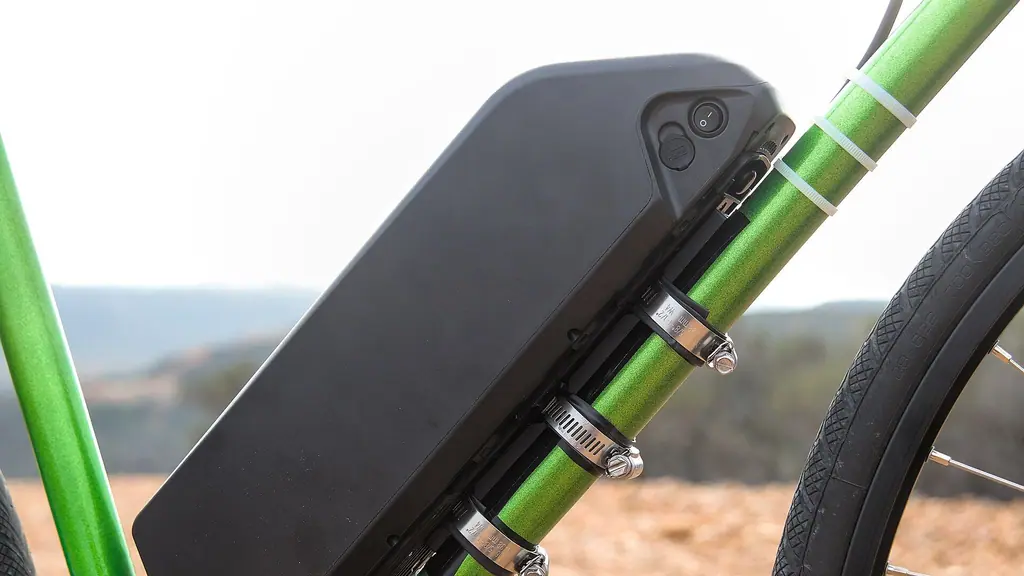
An e-bike battery label usually lists three numbers: volts (V), amp-hours (Ah) and watt-hours (Wh). Marketing copy adds others, such as motor watts and a headline range figure. Knowing what each one means makes it much easier to compare bikes, plan rides and avoid buying the wrong replacement.
This explainer covers the units, the chemistry inside the pack, what really determines range, and how to look after a battery so it lasts.
The three numbers on the label
Volts (V)
Voltage is electrical “pressure.” An e-bike pack is built from many small lithium-ion cells; connecting cells in series raises the pack’s voltage. The voltage is fixed by design and must match the motor controller. It is not something you should upgrade on your own: a pack of the wrong voltage can damage the system or create a fire hazard.
Amp-hours (Ah)
Amp-hours describe how much charge the pack can deliver over time. Connecting groups of cells in parallel raises the amp-hour rating. On its own, Ah is not a fair comparison between packs, because a 15 Ah pack at a lower voltage can hold less energy than a 12 Ah pack at a higher one.
Watt-hours (Wh): the number that matters most
Watt-hours measure stored energy, and that is what decides how far the motor can help you. The Federal Aviation Administration’s lithium battery guidance gives the simple formula: multiply the battery’s voltage by its amp-hours.
| Pack label | Calculation | Energy |
|---|---|---|
| 36 V, 10 Ah | 36 × 10 | 360 Wh |
| 36 V, 14 Ah | 36 × 14 | 504 Wh |
| 48 V, 10 Ah | 48 × 10 | 480 Wh |
| 48 V, 14 Ah | 48 × 14 | 672 Wh |
These are illustrative examples, not recommendations. When comparing two bikes, compare watt-hours first.
Motor watts are a different thing
Motor wattage (W) describes power: how fast energy is used, not how much is stored. Under the federal definition of a low-speed electric bicycle, cited in the U.S. Consumer Product Safety Commission’s 2026 micromobility report, the motor must be under 750 watts and the bike’s motor-only top speed under 20 mph (32 km/h) for a 170-pound (77 kg) rider. A higher-power motor can drain the same battery faster if you use that power. For more on motors, see our guide to e-bike motor types.
What is inside the pack
All lithium-ion cells work on the same principle. As UL Research Institutes (2026) explains, each cell has a negative electrode (anode), a positive electrode (cathode), an electrolyte and a separator. During discharge, lithium ions move from the anode to the cathode inside the cell while electrons flow through the external circuit to power the motor. Charging reverses that flow.
Packs also include a battery management system (BMS): electronics that sit between the cells and the rest of the bike and oversee charging and discharging. The pack, its BMS and the charger are designed to work together, which is one reason a properly matched charger and an intact, certified pack matter so much.
Chemistry differences
Packs differ by cathode chemistry. Two families come up often in discussions of electric vehicles: nickel-based chemistries such as NCM (nickel cobalt manganese) and lithium iron phosphate (LFP).
A 2021 comparison study published in the Journal of Energy Chemistry and listed by Oak Ridge National Laboratory found clear trade-offs under overcharge testing:
- The NCM cells offered better energy density, and higher nickel content reduced thermal stability.
- The LFP cell had a milder failure, releasing heavy smoke without flames, while the NCM cells caught fire or exploded.
- However, under the same overcharge conditions, the LFP cell reached thermal runaway earlier.
The lesson for riders is that no chemistry is fireproof. Charger compatibility, a working BMS, physical protection and certification matter regardless of what is inside.
What determines real-world range
A manufacturer’s range claim is a best-case estimate. An engineering feature from ASME (2025) describes typical ranges of 30 to 120 miles per charge, depending on rider weight, wind, hills and how much pedal assist or throttle is used. That spread shows how much conditions matter.
| Factor | Effect on range | What you can do |
|---|---|---|
| Assist level and throttle use | Higher assist draws more energy per mile | Use lower assist on flat ground and in tailwinds |
| Speed | Air resistance rises steeply with speed | Cruise a little slower on long trips |
| Total weight (rider, cargo, child seat) | More weight takes more energy, especially uphill | Plan extra margin for loaded trips |
| Hills and headwinds | Climbing and wind are major drains | Shift to an easier gear before climbs |
| Stops and starts | Accelerating from a stop uses extra energy | Anticipate lights; smooth starts help |
| Tire pressure and drag | Soft tires and rubbing brakes waste energy | Keep tires at the sidewall pressure |
| Temperature | Cold reduces usable capacity | Store and charge indoors in winter |
| Battery age | Capacity fades over time and cycles | Expect less range from an older pack |
On temperature, U.S. fueleconomy.gov reports that in AAA’s 2019 testing of electric cars, range was about 12% lower at 20°F (minus 7°C) than at 75°F (24°C) even with the cabin heater off. E-bikes are a different vehicle, but the underlying chemistry is similar, so winter riders should expect some loss.
To turn these variables into a planning number, try our e-bike range estimator. The basic logic is simple: usable watt-hours divided by your energy use per mile gives miles of assisted riding.
How capacity fits different riders
Rather than buying the biggest pack available, match capacity to how you ride:
- Short urban commutes with charging at home rarely need a very large pack. A lighter battery makes the bike easier to lift and carry.
- Long commutes, hilly routes or cargo and family bikes benefit from more watt-hours, and some bikes accept a second battery.
- Riders without home charging should leave a margin so they are not riding the last miles on a nearly empty pack.
If you are still deciding whether an e-bike suits you, our comparison of a traditional bicycle and an e-bike walks through cost, fitness and practicality.
Helping a battery last
Good habits slow capacity loss and reduce risk:
- Avoid deep discharges. Consumer NZ’s maintenance guide (2026) suggests recharging before the battery drops below 20%.
- Store partly charged. For long breaks, Consumer NZ advises keeping the charge above 50% and storing the pack out of hot, cold or damp conditions. Follow your manufacturer’s figure if it gives one.
- Keep it moderate. Heat is hard on lithium-ion cells; do not leave the battery in a hot car or in direct sun.
- Protect it physically. A drop or crash can damage cells internally. UL Solutions notes (2026) that some failure conditions can develop inside a cell before there are visible signs.
- Use the matched charger. Use only the charger supplied or approved by the manufacturer.
Charging, storage and warning signs are covered in depth in our guide to e-bike battery safety and storage.
Buying a replacement battery
Batteries wear out eventually, and replacements are expensive, which makes cheaper third-party packs tempting. Match the original specification exactly: same voltage, a connector and mount designed for your bike, and compatibility confirmed by the manufacturer. The U.S. Consumer Product Safety Commission’s micromobility safety guidance advises against packs that have been modified, rebuilt by unqualified people or made with used cells, and recommends products certified to recognized safety standards. A higher amp-hour rating at the same voltage can add range, but only if the manufacturer approves that pack for your bike.
Air travel and shipping
Most e-bike batteries cannot travel with you on a passenger plane. The FAA limits spare lithium-ion batteries to 100 Wh each, or up to two larger batteries of 101 to 160 Wh with airline approval. Even the smallest example pack in the table above, at 360 Wh, is more than double that ceiling. Shipping a battery separately is also regulated as hazardous material, so check with the carrier.
Key takeaways
- Watt-hours (volts × amp-hours) measure stored energy and are the best single number for comparing e-bike batteries.
- Voltage must match the motor system; never fit a battery of a different voltage or an unapproved charger.
- Chemistries involve trade-offs between energy density and failure behavior, and none is immune to thermal runaway.
- Assist level, speed, weight, hills, wind, tire pressure, temperature and battery age all change real range.
- Store batteries partly charged in moderate conditions and protect them from heat and impact.
Questions readers ask
Is a higher-voltage e-bike battery better?
Not automatically. Voltage has to match the motor and controller it was designed for, and range depends on total energy in watt-hours, not voltage alone. Never swap in a battery of a different voltage.
Can I take an e-bike battery on a plane?
Usually not. FAA rules limit passengers to lithium-ion batteries of 100 Wh, or up to 160 Wh with airline approval, and most e-bike packs are rated well above that. Check with your airline before traveling.
Why does my range drop in winter?
Lithium-ion batteries deliver less usable energy in the cold, and cold air, wet roads and heavier clothing add resistance. Storing and charging the battery indoors at room temperature helps.
Sources
- PackSafe - Lithium Batteries, Federal Aviation Administration (2026).
- What Are Lithium-Ion Batteries?, UL Research Institutes (2026).
- Overcharge-to-thermal-runaway behavior and safety assessment of commercial lithium-ion cells with different cathode materials: A comparison study, Oak Ridge National Laboratory (Journal of Energy Chemistry) (2021).
- The E-Bike Revolution is Altering the Bicycle Market, ASME (2025).
- Fuel Economy in Cold Weather, U.S. Department of Energy / EPA (fueleconomy.gov) (2019).
- E-bike maintenance, Consumer NZ (2026).
- When Lithium-Ion Batteries Fail: Understanding Thermal Runaway and Safety Risks, UL Solutions (2026).
- Micromobility: E-Bikes, E-Scooters and Hoverboards, U.S. Consumer Product Safety Commission (2024).
- Micromobility Products-Related Deaths, Injuries, and Hazard Patterns: 2017-2024, U.S. Consumer Product Safety Commission (2026).
Green Mobility Network is an independent publication. This article is for general information and is not legal, medical or professional advice; rules differ by state and city. Spotted an error? Read our corrections policy and write to contact@greenmobilitynetwork.org.