Understanding transportation accessibility: ADA, PROWAG and more
An accessible transportation system lets everyone reach jobs, school, health care and community life, including people with disabilities, older adults and the many households that do not drive.
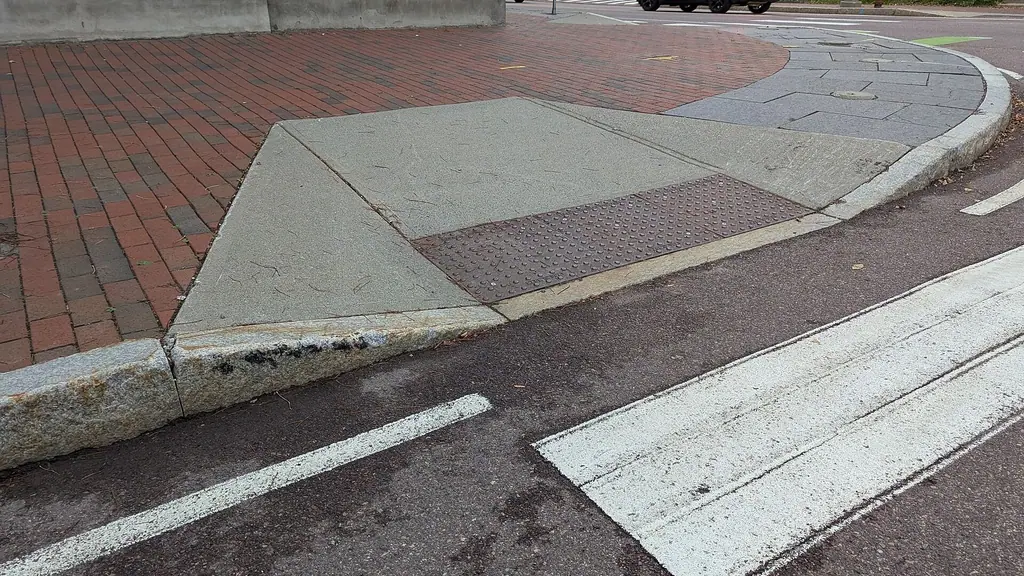
Transportation accessibility is about whether people can actually reach the places they need to go. For a wheelchair user, that might depend on a single missing curb ramp. For someone who is blind, it might depend on whether a crossing signal gives audible information. For an older adult who no longer drives, or a family without a car, it depends on whether sidewalks, transit and safe crossings connect home to everyday destinations.
This guide explains the main US laws and standards, what the 2023 public right-of-way rule changes, how paratransit works and why accessibility planning benefits far more people than it might first appear.
Who accessibility serves
Accessibility is often discussed as a niche concern. The numbers say otherwise.
- People with disabilities. According to the CDC, more than 1 in 4 US adults have some type of disability. Among adults, 12.2 percent have a mobility disability and 5.5 percent have a vision disability.
- Older adults. The Census Bureau counted 55.8 million people aged 65 and older in 2020, 16.8 percent of the population, up 38.6 percent from 2010.
- People without cars. The Bureau of Transportation Statistics reports that in 2022, 30 percent of households in the lowest income fifth did not own or lease a vehicle (BTS, 2023).
- Everyone, at some point. Parents with strollers, travelers with luggage and people recovering from an injury all benefit from level sidewalks, curb ramps and clear signals.
The legal framework
The ADA
The Americans with Disabilities Act of 1990 (ADA) is the foundation of US accessibility law. Its Title II applies to state and local government facilities, which include most streets, sidewalks and public transit systems. Requirements for transit service, including paratransit, are set out in U.S. Department of Transportation regulations at 49 CFR Part 37.
PROWAG: the 2023 public right-of-way rule
Federal accessibility standards for buildings and sites have existed for years, but public sidewalks and streets work differently and long lacked finalized federal guidelines of their own. The U.S. Access Board addressed that gap when it published its final Accessibility Guidelines for Pedestrian Facilities in the Public Right-of-Way, known as PROWAG, on August 8, 2023, effective September 7, 2023.
An important caveat: the rule states that the guidelines are voluntary until other agencies adopt them as enforceable standards. Under the ADA, that means the Department of Justice and USDOT. As of 2026, the Access Board reports two adoptions: GSA on July 3, 2024, and USDOT on December 18, 2024, for new construction and alterations of transit stops in the public right-of-way. The guidelines apply to new construction and alterations, not to existing facilities that are left unaltered.
Key PROWAG provisions
| Feature | What the 2023 guidelines require (summary) |
|---|---|
| Pedestrian access routes | A continuous accessible route, generally at least 48 inches (1.2 m) wide, with 5-by-5-foot passing spaces at least every 200 feet where narrower than 60 inches |
| Cross slope | Maximum 1:48 (about 2.1 percent) outside crosswalks, with separate rules inside crosswalks |
| Curb ramps and blended transitions | Required where pedestrian routes meet the street, including both ends of altered crosswalks |
| Detectable warning surfaces | Required at curb ramps, blended transitions, cut-through refuge islands and certain rail crossings |
| Accessible pedestrian signals | Required wherever new pedestrian signals are installed or existing ones are altered |
| Roundabouts | Multilane crosswalks need an added treatment such as a pedestrian signal, pedestrian hybrid beacon, pedestrian-actuated rectangular rapid flashing beacon or raised crossing |
| Shared use paths | Covered by the guidelines; paths used primarily for recreation are treated differently |
Summary based on the Access Board’s final rule, 88 FR 53604 (2023). Consult the rule and adopting agencies for exact requirements.
The Access Board acknowledged that universal installation of accessible pedestrian signals, which provide audible and vibrotactile information about the walk interval, is the single most costly provision, and also the one expected to bring the greatest gain for people who are blind or have low vision.
Two other provisions address everyday frustrations. Pedestrian push buttons must be placed within reach of a person seated in a wheelchair. And when construction closes a sidewalk, the guidelines call for an alternate pedestrian access route so that work in the right-of-way does not cut people with disabilities off from their destinations.
FHWA’s 2022 complete streets report had flagged updating federal standards to improve accessibility for pedestrians with disabilities as one of its ongoing challenges, which PROWAG’s publication partly addresses.
Paratransit: the safety net
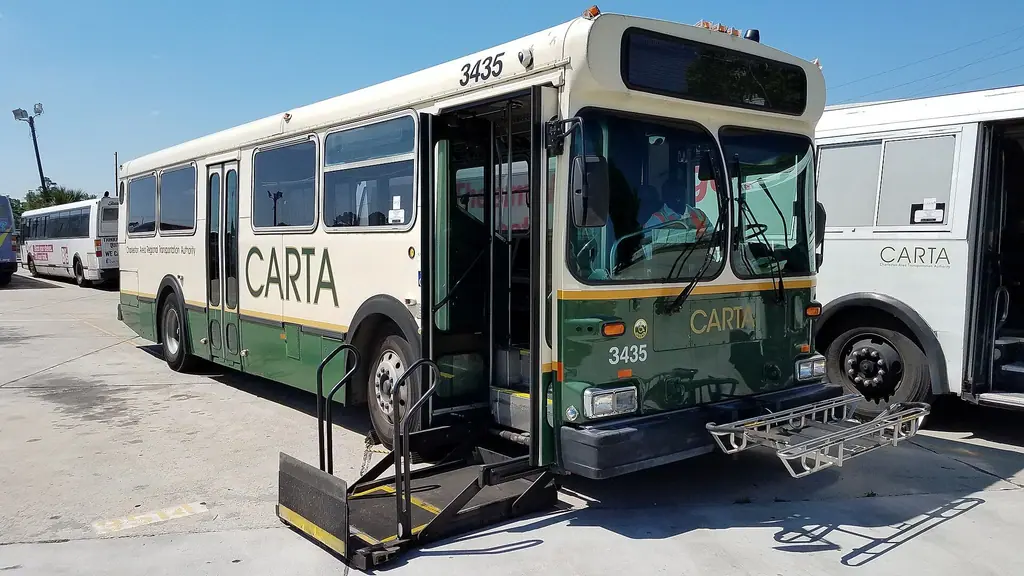
Public entities that operate fixed-route transit must also provide complementary paratransit for people with disabilities who cannot use the fixed-route system, under 49 CFR 37.121. Commuter bus, commuter rail and intercity rail are exempt. Federal rules at 49 CFR 37.131 set minimum service criteria:
| Criterion | Federal minimum |
|---|---|
| Service area | Within three-quarters of a mile of bus routes and around rail stations |
| Scheduling | Next-day service must be available; pickup times can be negotiated within one hour of the requested time |
| Fares | No more than twice the full fixed-route fare for a similar trip |
| Hours and days | Same as the fixed-route system |
| Trip purpose | No restrictions or priorities based on purpose |
| Capacity | No trip caps, waiting lists or patterns of frequent late pickups, denials or missed trips |
Paratransit is essential, but it is also costly and less flexible than fixed-route service. That is why accessible bus stops, sidewalks and crossings matter: they let more people use regular transit, and they make the paratransit system easier to sustain.
Designing streets for everyone
Many accessibility features make streets better for all users:
- Continuous, smooth sidewalks without gaps, broken pavement or obstructions such as poles in the walking path.
- Shorter crossing distances through curb extensions and refuge islands, which help people who walk slowly. Our guide to safer street crossings covers these tools.
- Accessible bus stops with boarding areas connected to the sidewalk, which USDOT has now adopted PROWAG for in new and altered stops.
- Adequate crossing time at signals, and lighting at crossings and stops.
- Accessible cycling and micromobility options, including adaptive bicycles, discussed in our article on adaptive cycling.
These are central to the complete streets approach, which explicitly names people with disabilities, children and older adults among the users a street must serve.
Why accessible streets matter for health and independence
Access to safe walking routes is also a health issue. A 2026 CDC data brief found that in 2024 only 22.4 percent of adults with disabilities met federal aerobic activity guidelines, compared with 49.8 percent of adults without disabilities, and that the share fell with age, to 38.4 percent among people 65 and older. Barriers such as missing curb ramps, broken sidewalks and crossings that are too long to complete in one signal cycle make everyday walking harder for exactly the people who stand to gain the most from it.
Independence is the other half of the picture. An older adult who stops driving, or a person who never could, depends on the walking network and transit to keep working, shopping, seeing a doctor and staying connected to friends and family.
What residents can do
- Report barriers such as missing curb ramps, broken sidewalks or non-working pedestrian signals to the agency that owns the street.
- Ask about accessible pedestrian signals at intersections you use, especially where signals are being installed or rebuilt.
- Take part in project reviews. Public comment on street, sidewalk and transit projects helps agencies set accessibility priorities.
- Check local paratransit rules, since eligibility processes and service details vary by agency.
We do not provide legal advice. For a specific situation, contact the agency involved or a qualified disability rights organization.
Key takeaways
- More than 1 in 4 US adults have a disability, and 55.8 million people were 65 or older in 2020, so accessibility affects a large share of travelers.
- PROWAG, published August 8, 2023, sets detailed guidelines for sidewalks, crossings, signals and transit stops, but becomes enforceable only as agencies adopt it.
- As of 2026, USDOT has adopted PROWAG for new and altered transit stops in the public right-of-way.
- ADA paratransit must match fixed-route hours, cost no more than twice the fixed-route fare and operate without trip caps or waiting lists.
- Accessible design, from curb ramps to accessible signals, makes streets safer and easier for everyone.
Questions readers ask
Is PROWAG legally enforceable?
The guidelines themselves are not enforceable until other agencies adopt them as standards. As of 2026, the Access Board reports that GSA adopted them in July 2024 and USDOT adopted them in December 2024 for new construction and alterations of transit stops in the public right-of-way. Check with the relevant agency for how they apply to a specific project.
Who qualifies for ADA paratransit?
ADA complementary paratransit is for people whose disability prevents them from using the accessible fixed-route bus or rail system for some or all trips. Each transit agency runs its own eligibility process, so contact your local agency to apply.
How do I report a missing curb ramp or broken pedestrian signal?
Contact the agency that owns the street, usually through a city or county service request line or its ADA or accessibility office. State highways are handled by the state transportation department. Note the exact location and take a photo if it is safe to do so.
Sources
- Accessibility Guidelines for Pedestrian Facilities in the Public Right-of-Way (88 FR 53604), U.S. Access Board (2023).
- Public Right-of-Way Accessibility Guidelines, U.S. Access Board (2026).
- 49 CFR 37.121: Requirement for comparable complementary paratransit service, Legal Information Institute, Cornell Law School (2026).
- 49 CFR 37.131: Service criteria for complementary paratransit, Legal Information Institute, Cornell Law School (2026).
- Disability Impacts All of Us Infographic, CDC (2026).
- Aerobic Physical Activity Among Adults Age 18 and Older: United States, 2024 (NCHS Data Brief No. 555), CDC National Center for Health Statistics (2026).
- U.S. Older Population Grew From 2010 to 2020 at Fastest Rate Since 1880 to 1890, U.S. Census Bureau (2023).
- The Household Cost of Transportation: Is it Affordable?, Bureau of Transportation Statistics (2023).
- Moving to a Complete Streets Design Model: A Report to Congress on Opportunities and Challenges, Federal Highway Administration (2022).
Green Mobility Network is an independent publication. This article is for general information and is not legal, medical or professional advice; rules differ by state and city. Spotted an error? Read our corrections policy and write to contact@greenmobilitynetwork.org.