Sustainable transportation in South Florida: where things stand
A status check on Miami-Dade's transit and rail options, anchored to official dates, and why transportation sits at the center of the region's climate plans.
South Florida is often described as car country, and for most trips it still is. But the region has more transit and rail options than many residents realize, and several have changed significantly since 2023. This article takes stock of the main systems, separates what is running from what is planned, and explains why transportation is central to Miami-Dade’s climate strategy.
Statuses are anchored to official pages or news reports with dates. Transit schedules and fares change, so confirm details with the operator before you travel.
The climate case
Miami-Dade’s Climate Action Strategy reports that in the county’s 2019 community-wide greenhouse gas inventory, transportation produced 55 percent of emissions, buildings 41 percent and water and waste 4 percent. The county’s goal is to cut overall emissions 50 percent by 2030 and reach net zero by 2050, and it says reducing transportation fuel use will have the largest single impact.
Sea-level rise adds urgency. The Southeast Florida Regional Climate Change Compact, a partnership of Broward, Miami-Dade, Monroe and Palm Beach counties, released a unified projection in December 2019 of 10 to 17 inches (25 to 43 cm) of rise by 2040 and 21 to 54 inches (53 to 137 cm) by 2070, relative to 2000 levels. That affects transportation directly: a February 2026 county fact sheet for replacing the Venetian Causeway bridges says the new bridges would be raised to mitigate sea-level rise.
To estimate what switching some trips to a bike could save, try our cycling carbon savings calculator.
Rail and fixed guideway
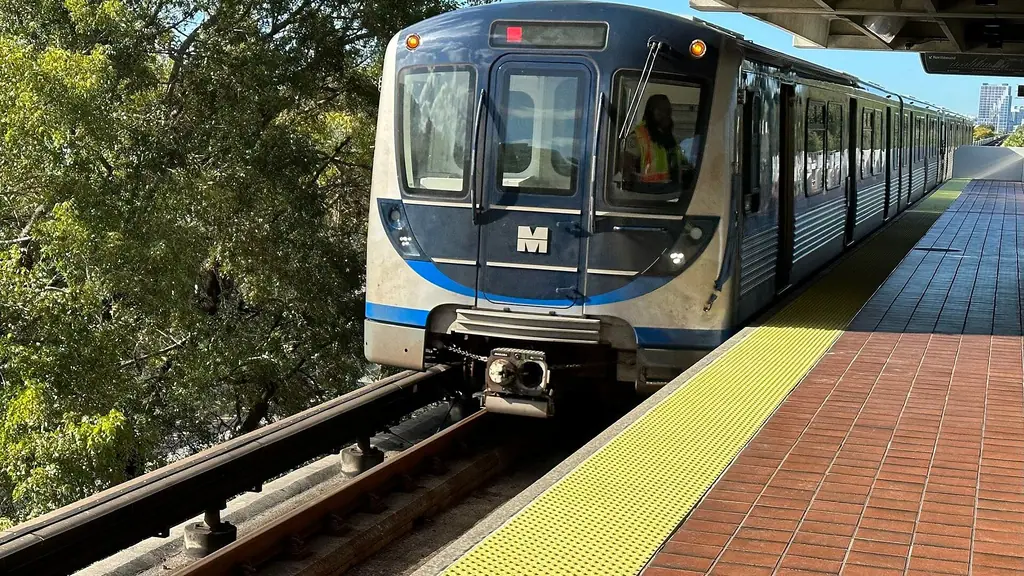
Metrorail. Miami-Dade’s Metrorail runs on 25 miles (40 km) of dual track. The Green Line connects Palmetto and Dadeland South, and the Orange Line serves Miami International Airport. Trains run from 5 a.m. to midnight daily, and the county lists a $2.25 fare with free bus-to-rail transfers. Riders can transfer to Brightline at the Historic Overtown/Lyric Theatre station and to Tri-Rail at the Green Line’s Tri-Rail station.
Metromover. Metromover is a free, elevated people mover with 21 stations on three loops (Omni, Inner and Brickell), running 5:30 a.m. to 10 p.m. daily.
Tri-Rail. The regional commuter rail line links Miami-Dade, Broward and Palm Beach counties. After years of delays, Tri-Rail began serving MiamiCentral station in downtown Miami on January 13, 2024, according to WLRN. The report noted that Tri-Rail allows bicycles on board.
Brightline. The privately operated intercity rail service began running between Miami and Orlando on September 22, 2023, according to CBS News Miami. WLRN reported in 2024 that Brightline does not allow bikes on board, unlike Tri-Rail.
Buses: a redesigned network and new rapid transit
Better Bus Network. Miami-Dade launched its redesigned bus system on November 13, 2023, according to the county’s project page. The county reports that frequent routes increased from five to 19, and that the share of residents within 15 minutes of frequent weekday transit rose from 14 percent to 30 percent. Weekend service on most local routes increased to near weekday levels. The county also reports that the share of low-wage jobs near frequent Saturday service rose from 17 percent to 42 percent, and that about 20,000 more households without cars gained access to more frequent service. Those numbers describe access, not ridership, so they show what the redesign made possible rather than how many people changed how they travel.
South Dade bus rapid transit. The county’s Metro Express bus rapid transit service on the South Dade TransitWay runs about 20 miles (32 km) from the SW 344th Street park-and-ride to Dadeland South Metrorail station, with 14 new stations. It launched on October 27, 2025, after bus rapid transit was selected for the corridor in 2018 and construction began in 2021.
The SMART Program: the long-range plan
The Strategic Miami Area Rapid Transit plan, now carried out by the county as the SMART Program, is the region’s framework for rapid transit expansion. The Miami-Dade TPO’s SMART Plan booklet describes six rapid transit corridors plus a network of express buses called Bus Express Rapid Transit (BERT).
| SMART corridor | Status we could verify |
|---|---|
| South Dade TransitWay | Bus rapid transit opened October 2025 (Miami-Dade County) |
| North Corridor | Planned; no current status verified |
| Beach Corridor | Planned; no current status verified |
| East-West Corridor | Planned; no current status verified |
| Northeast Corridor | Planned; no current status verified |
| Kendall Corridor | Planned; no current status verified |
Corridor plans have shifted in scope over the years, so check the county’s SMART Program pages for the latest phase of each.
Walking, cycling and micromobility
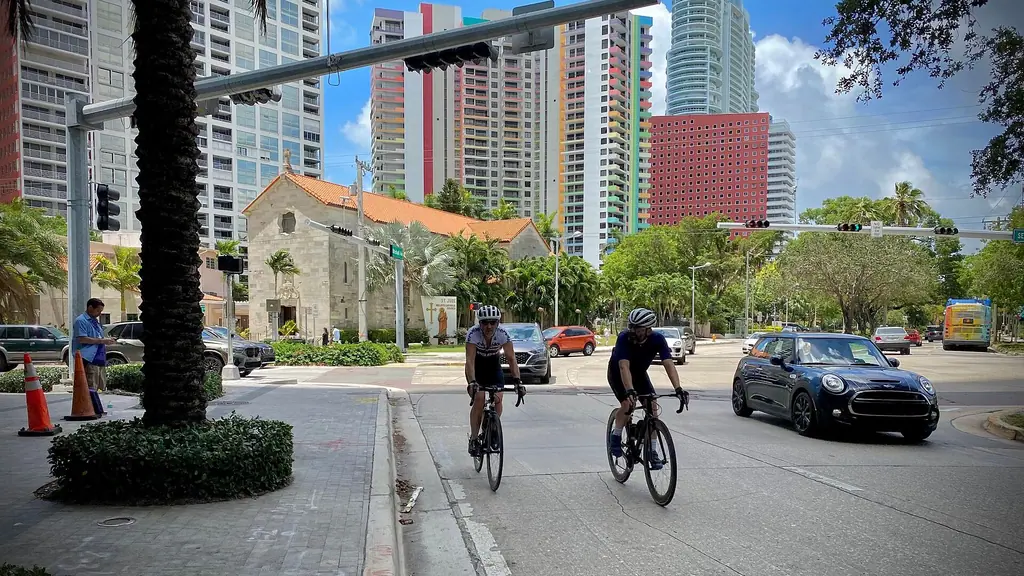
Transit works best when people can reach it on foot or by bike. Miami-Dade’s Bike and Ride rules let riders carry bikes on Metrorail and Metromover and load them on Metrobus racks, and every Metrorail station has bike racks. For more on combining modes, see cycling and public transportation integration.
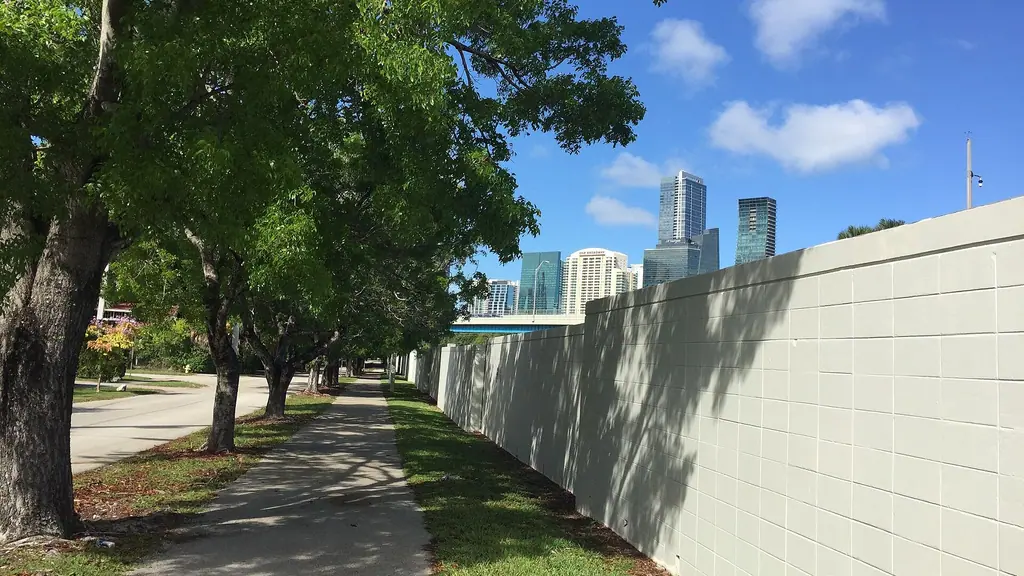
Trails are becoming transportation corridors too. The Underline, built beneath Metrorail, is planned to connect eight stations along a 10-mile corridor; its first two phases opened in 2021 and 2024, and the county expects completion of the final phase in 2026. Bike share is available through Citi Bike Miami in Miami and Miami Beach.
Trips that work without a car today
Using only the services described above, several common trip types are realistic without driving:
| Trip | One way to make it |
|---|---|
| Downtown and Brickell errands | Free Metromover loops, plus walking |
| Kendall or South Miami to downtown | Metrorail from Dadeland South or South Miami, with a bike on board for the first or last mile |
| Homestead or Cutler Bay to Dadeland | South Dade bus rapid transit to Dadeland South, then Metrorail |
| Broward or Palm Beach to downtown Miami | Tri-Rail to MiamiCentral, or Brightline for intercity trips |
| Short neighborhood trips | Walking, a personal bike or Citi Bike Miami in served areas |
Frequency, transfers and walking distances vary widely across the county, so check trip planners before relying on a route. Areas far from rail and frequent bus lines remain hard to serve without a car.
What to watch next
A few milestones will show whether South Florida’s shift continues:
- The Underline’s final phase. Completion of the 7.36-mile Phase 3, which the county expects in 2026, would give eight Metrorail stations a continuous walking and cycling corridor.
- SMART corridor decisions. Funding and design choices for the remaining corridors will determine how much new rapid transit the county adds in the next decade.
- Bus performance. Frequent routes only help if buses arrive reliably, so on-time performance on the redesigned network matters as much as the map.
- Climate progress reports. The county’s emissions goals for 2030 depend heavily on transportation, so its progress reports are worth following.
What this adds up to
South Florida’s sustainable transportation story is mixed. Real gains since 2023 include a redesigned bus network with more frequent routes, a new bus rapid transit line in South Dade, Tri-Rail access to downtown Miami and The Underline’s expansion. At the same time, most SMART corridors remain in planning, and the climate numbers show how much depends on shifting trips away from private cars.
For the broader case for these investments, read how sustainable transportation improves cities.
Key takeaways
- Transportation produced 55 percent of Miami-Dade’s greenhouse gas emissions in the county’s 2019 inventory; the county aims for a 50 percent cut by 2030 and net zero by 2050.
- Metrorail runs on 25 miles of track; Metromover is free, with 21 stations on three loops.
- The Better Bus Network launched in November 2023 and raised the number of frequent routes from five to 19.
- South Dade bus rapid transit opened in October 2025; other SMART corridors are still in planning.
- Tri-Rail reached downtown Miami in January 2024, and Brightline began Miami-Orlando service in September 2023.
Questions readers ask
Is Metromover free?
Yes. Miami-Dade County describes Metromover as a free elevated people mover with 21 stations on three loops serving downtown, Brickell and the Omni area, running 5:30 a.m. to 10 p.m. daily as of the county's 2025 page.
Can I take Tri-Rail to downtown Miami?
Tri-Rail began serving MiamiCentral station in downtown Miami on January 13, 2024, according to WLRN. Check Tri-Rail's current schedule, because some trips have required a transfer.
Why does transportation matter so much for Miami's climate goals?
Miami-Dade's Climate Action Strategy reports that transportation produced 55 percent of the county's greenhouse gas emissions in its 2019 inventory, more than buildings, so cutting vehicle fuel use has the largest single effect.
Sources
- Metrorail, Miami-Dade County Department of Transportation and Public Works (2025).
- Metromover, Miami-Dade County Department of Transportation and Public Works (2025).
- Better Bus Network Project Information, Miami-Dade County Department of Transportation and Public Works (2025).
- Metro Express Bus Rapid Transit Service, Miami-Dade County Department of Transportation and Public Works (2025).
- SMART Plan booklet, Miami-Dade TPO (2017).
- Tri-Rail service to downtown Miami begins, WLRN (2024).
- All Aboard! Brightline begins Miami to Orlando service, CBS News Miami (2023).
- Climate Action Strategy, Miami-Dade County (2025).
- The Compact releases its 3rd Regionally Unified Sea Level Rise Projection, Southeast Florida Regional Climate Change Compact (2019).
- The Underline, Miami-Dade County (2025).
Green Mobility Network is an independent publication. This article is for general information and is not legal, medical or professional advice; rules differ by state and city. Spotted an error? Read our corrections policy and write to contact@greenmobilitynetwork.org.