Pedestrian safety in Miami: the data, the plans and what works
Miami-area pedestrian deaths rose between 2015 and 2024. Here is what the national rankings show, what county and state programs promise, and which proven fixes matter.
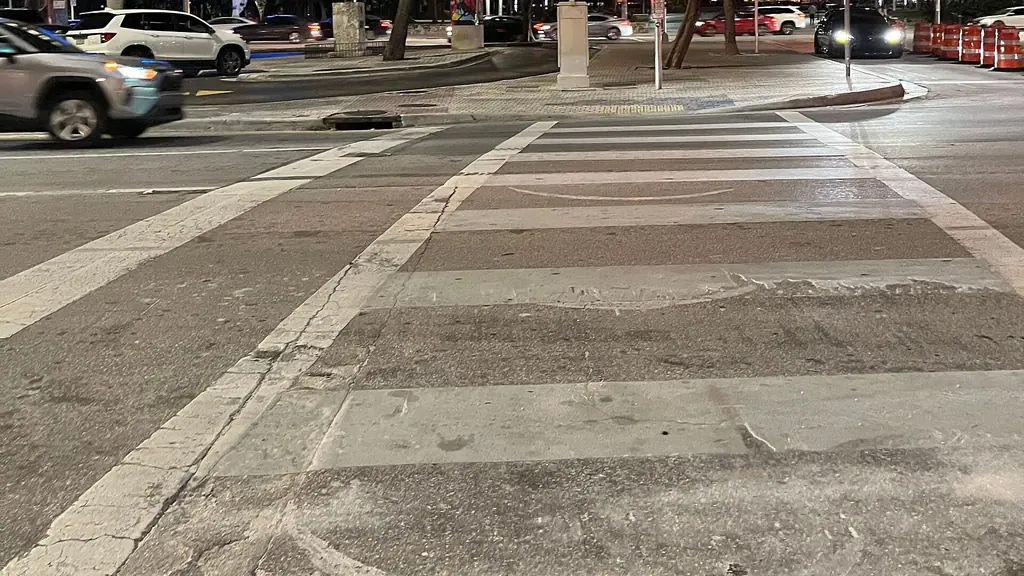
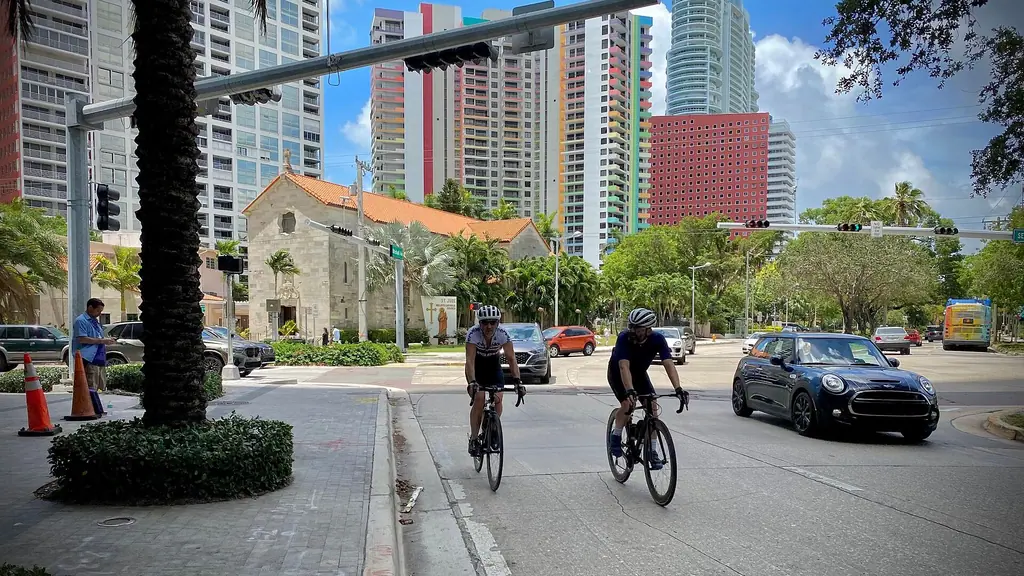
Walking is the most basic form of transportation, and in Miami-Dade it is also one of the riskiest. National rankings place the Miami metro area among the more dangerous large regions for people on foot, and county data show traffic deaths concentrated on a small share of roads. This article summarizes what the numbers say, what local and state programs are doing about it, and which design changes have the strongest track record.
For the general picture beyond South Florida, see our explainer on pedestrian safety basics.
What the national rankings show
Smart Growth America’s Dangerous by Design report ranks the 101 largest US metro areas by their pedestrian fatality rate. In the 2026 edition, which uses 2020 to 2024 data:
| Measure | Miami-Fort Lauderdale-West Palm Beach metro | Florida (state) |
|---|---|---|
| Rank | 17th of 101 metros | 5th among states |
| Average annual pedestrian deaths per 100,000 people (2020-2024) | 3.4 | 3.32 |
| Pedestrian deaths, 2020-2024 | 1,062 | 3,726 |
| Pedestrian deaths, 2015-2019 | 945 | Not shown in our source |
The Miami metro’s pedestrian deaths rose from 945 in 2015 to 2019 to 1,062 in 2020 to 2024. Coverage of the report by WLRN and Florida Phoenix noted that nine of the 27 most dangerous metros in the 2026 rankings are in Florida, with Tampa Bay the highest-ranked in the state at eighth.
Rankings compare metros against each other, so a city can improve and still rank poorly if others improve faster. They are best read as a signal of where the risk is concentrated, not as a grade on any single policy.
What Miami-Dade’s data show
Miami-Dade County’s 2024 Vision Zero Action Plan gives the local picture. Its opening message reports that 1,593 people died in traffic crashes in Miami-Dade from 2018 to 2022, and that in 2022 the county accounted for 9 percent of Florida’s more than 3,536 traffic deaths. These figures cover all road users, not only pedestrians.
Several findings in the plan stand out for people who walk:
- Risk is concentrated. The plan says 25 percent of crashes occur on under 1 percent of the county’s roadways. Those corridors make up the High-Injury Network that the county now prioritizes.
- Inequity is measurable. Using a federal screening tool for transportation-disadvantaged communities, the plan finds that 62 percent of killed or seriously injured crashes on county and municipal roads from 2018 to 2022 occurred in what it calls equity areas.
- Vulnerable users get a separate target. One of the plan’s commitments is to achieve zero pedestrian and bicyclist fatalities, tracked alongside measures such as signals with leading pedestrian intervals and miles of sidewalk gaps closed.
Miami-Dade Vision Zero
According to the county’s Vision Zero page, the county’s first Vision Zero Plan was published by the Miami-Dade TPO in 2018. In 2021, Mayor Daniella Levine Cava and the County Commission formally established the Vision Zero Program and developed a Framework Plan. The 2024 Action Plan is a five-year roadmap through 2028, with an overall goal of ending traffic deaths and serious injuries by 2040.
The program is organized around five focus areas: better processes and collaboration, safe streets for everyone, safe speeds, a culture of safety, and better data and transparency. The county page reports progress including 21 completed safety projects, more than $3 million in federal Highway Safety Improvement Program grants for four projects, and a $16.2 million federal Safe Streets and Roads for All grant to fund improvements at 24 locations on the High-Injury Network. The page does not carry an update date, so those totals reflect its most recent revision.
FDOT’s statewide programs
The Florida Department of Transportation runs several programs that touch Miami streets, especially state roads such as US 1 and major arterials.
Target Zero. FDOT describes Target Zero as a statewide initiative to reduce transportation deaths and serious injuries to zero. It is a behavior-change campaign under Florida’s Strategic Highway Safety Plan, focused on speeding, aggressive driving, distraction and seat belt use. FDOT’s page says that roughly eight people are killed and 49 seriously injured on Florida roads each day.
Pedestrian and Bicycle Safety Program. FDOT’s program page, last updated in August 2025, says the state’s Pedestrian and Bicycle Strategic Safety Plan was updated in October 2021 and is carried out by a coalition with emphasis areas that include engineering, enforcement, education and Vision Zero Florida. The program also funds high-visibility enforcement in counties with the most serious pedestrian and bicycle crashes. FDOT’s engineering countermeasures page states that pedestrians and bicyclists account for 28 percent of Florida’s traffic fatalities and serious injuries.
Alert Today, Alive Tomorrow. FDOT’s District Six announced a 2025 run of this pedestrian and bicycle safety campaign in Miami-Dade and Monroe counties from July through September.
Countermeasures that work
FDOT’s countermeasures page lists treatments drawn from the Federal Highway Administration’s Proven Safety Countermeasures. The table explains in plain terms what the pedestrian-related ones do.
| Countermeasure | What it is | Why it helps people walking |
|---|---|---|
| Leading pedestrian interval | The walk signal starts a few seconds before cars get a green | Pedestrians are already in the crosswalk and more visible when turning drivers move |
| Crosswalk visibility enhancements | High-visibility markings, signs, lighting and parking restrictions near crossings | Drivers see crossings and people sooner |
| Rectangular rapid flashing beacons | Pedestrian-activated flashing lights at marked crossings | Prompts drivers to yield at uncontrolled crossings |
| Pedestrian hybrid beacons | Signals that stop traffic only when a pedestrian activates them | Creates a protected crossing on busy roads without a full traffic signal |
| Medians and refuge islands | Raised islands in the middle of the road | Lets people cross one direction of traffic at a time |
| Road reconfiguration (road diets) | Converting extra travel lanes into turn lanes, bike lanes or wider sidewalks | Shortens crossing distances and calms speeds |
| Walkways and lighting | Continuous sidewalks and better street lighting | Separates people from traffic and improves night visibility |
| Appropriate speed limits | Setting speeds suited to everyone using the street | Lower speeds reduce crash severity |
Miami-Dade’s 2024 plan commits to several of these, including new mid-block crossings, leading pedestrian intervals, improved lighting and traffic calming. For a deeper look at crossing design, see safer street crossings, and for the bigger design philosophy behind many of these changes, read what are complete streets?.
Where to follow progress
Plans are only as good as their follow-through. The county’s 2024 Action Plan includes commitments to track progress with key performance indicators, including the number of projects on the High-Injury Network, changes in serious crashes where safety treatments are installed, signals with leading pedestrian intervals, and miles of missing sidewalk built. It also commits to a public Vision Zero dashboard. Residents can use those measures to ask local officials whether the corridors with the most crashes are actually getting fixed.
Practical steps for people walking in Miami
Design matters most, but some habits reduce risk on today’s streets:
- Cross at signals and marked crossings where possible, and use the push button where one exists.
- Watch turning vehicles. Make eye contact with drivers before stepping out, even with a walk signal.
- Be visible after dark. Light-colored clothing or a small light helps, especially on poorly lit arterials.
- Report hazards. Broken signals, missing sidewalks and dark crossings can be reported to the city or county through 311.
Key takeaways
- The Miami-Fort Lauderdale-West Palm Beach metro ranked 17th of 101 metros in Dangerous by Design 2026, with pedestrian deaths rising from 945 (2015-2019) to 1,062 (2020-2024).
- Miami-Dade reports that a quarter of crashes occur on less than 1 percent of its roads, which is why it targets a High-Injury Network.
- The county’s Vision Zero program, established in 2021, aims to end traffic deaths and serious injuries by 2040.
- FDOT’s Target Zero focuses on driver behavior statewide; its pedestrian and bicycle program funds enforcement and education.
- Proven fixes include leading pedestrian intervals, refuge islands, better crossings, lighting and safer speeds.
Questions readers ask
Where does Miami rank for pedestrian safety?
In Smart Growth America's Dangerous by Design 2026 rankings, the Miami-Fort Lauderdale-West Palm Beach metro ranked 17th among 101 large metros, with an average of 3.4 pedestrian deaths per 100,000 people per year from 2020 to 2024. Florida ranked fifth among states.
What is Miami-Dade's Vision Zero goal?
Miami-Dade County's Vision Zero program aims to end traffic deaths and serious injuries on county roads by 2040. The county formally established the program in 2021 and published a five-year Action Plan in 2024.
What is the difference between Vision Zero and Target Zero?
Miami-Dade's Vision Zero program focuses on county policy and street design. FDOT's Target Zero is a statewide behavior-change initiative under Florida's Strategic Highway Safety Plan that targets dangerous driving habits such as speeding and distraction.
Sources
- 2026 state and metro rankings (Dangerous by Design 2026), Smart Growth America (2026).
- Report: Nine of the 27 most dangerous metro areas for pedestrians in the U.S. are in Florida, WLRN / Florida Phoenix (2026).
- Vision Zero, Miami-Dade County (2025).
- 2024 Miami-Dade County Vision Zero Action Plan, Executive Summary, Miami-Dade County Department of Transportation and Public Works (2024).
- Target Zero, Florida Department of Transportation (2025).
- Pedestrian and Bicycle Safety, Florida Department of Transportation (2025).
- Engineering Safety Countermeasures, Florida Department of Transportation (2022).
- FDOT to launch 2025 Alert Today, Alive Tomorrow campaign, FDOT District Six (2025).
Green Mobility Network is an independent publication. This article is for general information and is not legal, medical or professional advice; rules differ by state and city. Spotted an error? Read our corrections policy and write to contact@greenmobilitynetwork.org.