Cycling in Miami: a practical guide for everyday riders
Trails worth knowing, the Florida rules that matter, how to combine a bike with Miami-Dade transit, and how to plan rides around heat and afternoon storms.
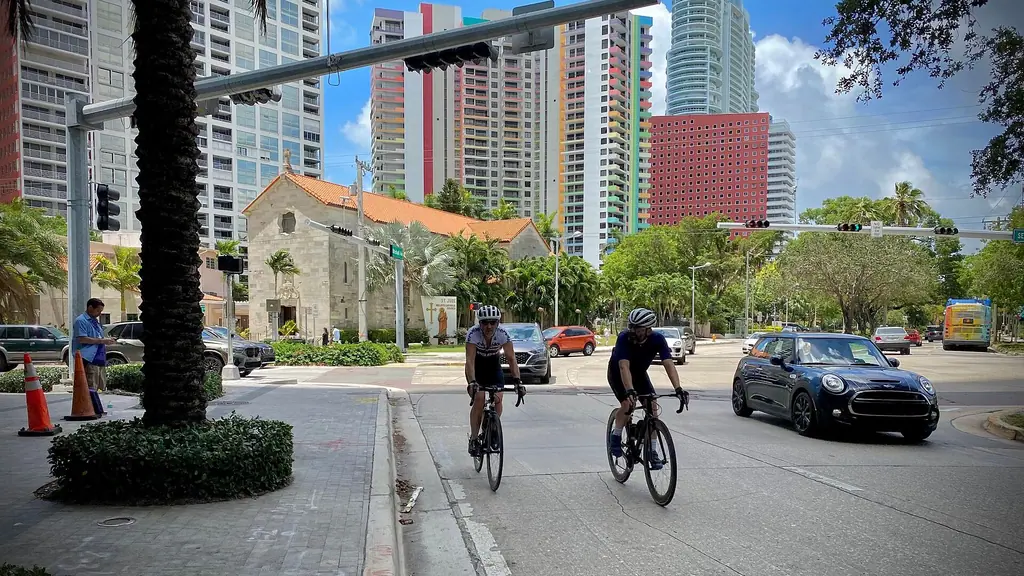
Miami is flat, warm all year and full of short trips that a bicycle handles well. It is also a place where heat, sudden storms and fast arterial roads demand planning. This guide pulls together the official information everyday riders need: where the comfortable routes are, which Florida laws apply, how to bring a bike on county transit, and how bike share works.
Statuses and rules below are anchored to the sources listed, most of them published between 2025 and 2026. Rules change, so treat this as a starting point and check the linked official pages before you rely on a detail.
Where to ride
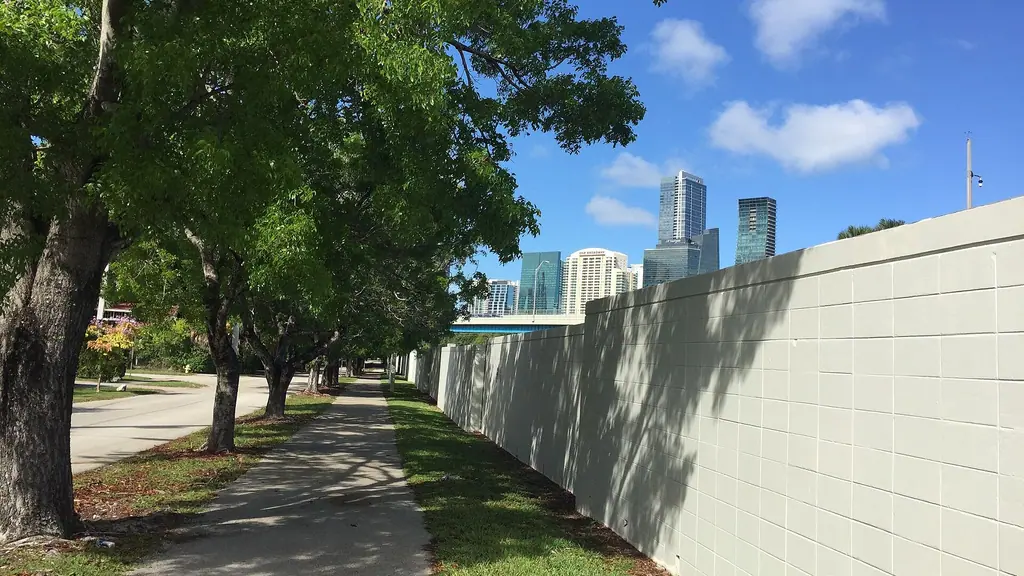
The most comfortable riding in Miami-Dade is on separated paths and trails, with on-street bike lanes filling gaps between them. A few routes stand out for new and returning riders.
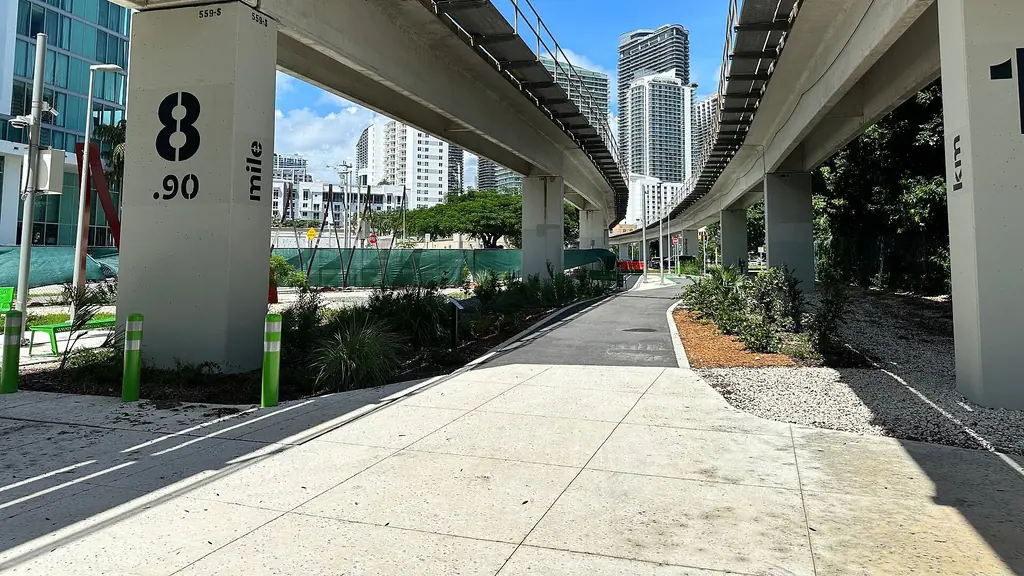
The Underline. Built along and beneath the Metrorail guideway, The Underline is planned as a 10-mile linear park and trail from the Miami River in Brickell to Dadeland South station, according to Miami-Dade County. Phase 1 opened on February 26, 2021, and the 2.14-mile Phase 2 opened on April 24, 2024. The county’s page describes the 7.36-mile Phase 3, from SW 19th Avenue to Dadeland South, as expected to be completed in 2026. Check the county page for which segments are open on the day you ride.
County trail routes. Miami-Dade’s Parks department publishes maps for its signed bike trails. The distances below come from those county maps.
| Route | Surface (county listing) | Length on county map |
|---|---|---|
| Rickenbacker Trail (Brickell area to Key Biscayne) | Paved | 8.5 miles (13.7 km) |
| Commodore Trail (Coconut Grove) | Paved | 5.0 miles (8 km) |
| Old Cutler Trail (Coral Gables to Cutler Bay area) | Paved | 11.0 miles (17.7 km) |
| Black Creek Trail (South Dade) | Paved and dirt | 8.7 miles (14 km) |
| Snake Creek Trail segment (North Miami-Dade) | Paved | 3.0 miles (4.8 km) |
For more detail on these and other routes, see our guide to Miami’s greenways and shared-use paths.
Downtown and the causeways. Downtown Miami has a growing set of separated bike lanes, and the Rickenbacker and Venetian causeways are popular with fitness and commuter riders alike. Causeway riding means sharing space with fast traffic in places, so ride predictably and avoid peak-traffic group rides if you are new.
Planning around heat and rain
South Florida’s wet season runs from May 15 to October 15, when 60 to 70 percent of the average yearly rainfall occurs, according to the National Weather Service in Miami. Humidity stays high and showers and thunderstorms develop almost daily during that period.
That pattern shapes good ride planning:
- Ride early. Morning rides avoid the hottest part of the day and usually come before afternoon storms build.
- Watch the sky and the forecast. The NWS Miami office’s 2026 lightning guidance says that if you can hear thunder, you are close enough to be struck, and that no place outside is safe. Get into an enclosed building and wait 30 minutes after the last thunder.
- Carry more water than you think. On hot days, plan stops where you can refill.
Our article on cycling safely in Florida’s climate covers heat illness warning signs, sun protection, hurricane season and flooding in more depth.
Florida rules every Miami rider should know
The points below summarize Florida Statutes as published for 2025. They are not legal advice; check the current statute text and any local ordinances.
Lights at night. Between sunset and sunrise, Florida Statute 316.2065 requires a white front lamp visible from at least 500 feet (152 m) and a red rear lamp and red reflector visible from 600 feet (183 m).
Helmets for under-16s. Riders and passengers under 16 must wear a properly fitted, fastened helmet meeting the federal standard.
Lane position. When moving slower than traffic, ride in a bike lane or as close as practicable to the right-hand edge, with exceptions that include passing, preparing for a left turn, avoiding hazards and lanes too narrow to share safely.
Riding side by side. Two abreast is allowed on bicycle paths, or within a bike lane if both riders fit inside it. Otherwise, the statute generally calls for single file and says riders may not impede traffic.
Sidewalks and crosswalks. On a sidewalk or crosswalk, a cyclist has the rights and duties of a pedestrian, must yield to people walking, and must give an audible signal before passing them.
Passing distance. Under Florida Statute 316.083, drivers must give at least 3 feet (0.9 m) when passing a bicycle.
E-bikes. Florida Statute 316.20655 gives e-bike riders the same rights and duties as cyclists, but lets local governments and agencies restrict e-bikes on paths, trails, beaches and sidewalks they manage. In Miami and Miami Beach, rules vary by place, so look for posted signs.
Bikes on Metrorail, Metromover and Metrobus
Combining a bike with transit stretches your range, especially in summer. The table summarizes Miami-Dade County’s Bike and Ride guidance as published in 2025.
| Service | How bikes travel | Notes from the county page |
|---|---|---|
| Metrorail | Walk the bike into any car | Use the accessible fare gate and elevator; use the bike and luggage area, not wheelchair spaces |
| Metromover | Carried on board | Use the elevator, wait away from the platform edge and let passengers without bikes exit first |
| Metrobus | Front-mounted rack | Load only after the bus stops; if the rack is full or missing, wait for the next bus |
| Tri-Rail | On board | Bikes allowed on all trains; racks and lockers at stations |
A few more details from the county:
- All Metrorail stations and Metrobus park-and-ride lots have bike racks, and free covered bike lockers are available first come, first served at several stations.
- Personal battery-powered e-bikes are allowed if switched off on board. Folding e-bikes must be folded. On Metrobus, e-bikes go on the exterior rack and may not exceed 75 pounds (34 kg).
- Rented commercial e-bikes and any fuel-powered bikes or scooters are not permitted on county transit vehicles.
For broader context on how bike-and-ride trips work, see cycling and public transportation integration.
Bike share: Citi Bike Miami
Citi Bike Miami is the docked bike share system serving Miami and Miami Beach. The City of Miami Beach announced in March 2025 a new five-year contract running through December 31, 2029, naming Citi Bike its official kiosk-based bike rental provider. The city has partnered with the system since 2009.
According to that release, about 1,100 bikes were available for rent in Miami Beach, including 100 electric-assist bikes, and the contract allows up to 100 more. Miami Beach residents can get a limited number of free rides each month after showing proof of residency. The release also notes that e-bikes are prohibited in certain areas, including the Beachwalk and pedestrian-only sections of Lincoln Road.
The system’s own site describes more than 160 station locations across Miami and Miami Beach, with bikes available around the clock. Pricing and pass types change, so check the official app or site before you ride.
Staying safe on Miami streets
Miami-Dade’s own Vision Zero program says close to 300 people die on county roads each year, and its 2024 Vision Zero Action Plan points to roadway designs that prioritize vehicle traffic as one of the causes. That context makes a few habits worthwhile:
- Choose the calmer route. A path or a lower-speed street that adds a few minutes is usually worth it.
- Be visible day and night. Use lights that meet the state minimum and consider a daytime flashing rear light, which helps in bright sun and storm gloom.
- Ride predictably. Hold a straight line, signal turns and make eye contact at driveways and intersections.
- Check your bike before you go. Heat and salt air are hard on tires, chains and brakes. Our interactive bike safety checklist walks through a quick pre-ride check.
Key takeaways
- The Underline, the Rickenbacker, Commodore and Old Cutler trails, and other county routes offer the most comfortable riding; check official pages for current openings.
- Plan rides around the May 15 to October 15 wet season: go early, carry water and get indoors when you hear thunder.
- Florida law (2025) requires front and rear lights at night, helmets for riders under 16, and 3 feet of clearance from passing drivers.
- Bikes ride on Metrorail, Metromover, Metrobus racks and Tri-Rail, with specific rules for e-bikes.
- Citi Bike Miami serves Miami and Miami Beach; local rules restrict e-bikes in some pedestrian areas.
Questions readers ask
Can I take my bike on Metrorail in Miami?
Yes. Miami-Dade County's Bike and Ride guidance says to enter through the wheelchair-accessible gate, use the elevator, and keep your bike in the designated bike and luggage area, never in wheelchair spaces. No time-of-day restriction is listed on the county page as of 2025.
Do adults have to wear a helmet when cycling in Florida?
Under Florida Statute 316.2065 (2025), the helmet requirement applies to riders and passengers under 16. Adults are not required by state law to wear one, but a properly fitted helmet is still a sensible choice.
Is it legal to ride a bike on the sidewalk in Miami?
Florida law (316.2065, 2025) gives sidewalk cyclists the rights and duties of pedestrians and requires them to yield and give an audible signal before passing people on foot. Local rules can add restrictions, and e-bike rules on sidewalks are set locally, so check the city you are riding in.
Sources
- Bike and Ride, Miami-Dade County Department of Transportation and Public Works (2025).
- Florida Statutes 316.2065, Bicycle regulations, The Florida Senate (2025).
- Florida Statutes 316.083, Overtaking and passing a vehicle, The Florida Senate (2025).
- Florida Statutes 316.20655, Electric bicycle regulations, The Florida Senate (2025).
- The Underline, Miami-Dade County (2025).
- Bike Trail Maps, Miami-Dade County Parks, Recreation and Open Spaces (2025).
- Miami Beach Signs New Contract with Citi Bike, City of Miami Beach (2025).
- Rainy Season 2025 Outlook, National Weather Service Miami-South Florida (2025).
- 2026 Severe Weather Awareness Week: Lightning Awareness Day, National Weather Service Miami-South Florida (2026).
- Citi Bike Miami, Citi Bike Miami (2026).
Green Mobility Network is an independent publication. This article is for general information and is not legal, medical or professional advice; rules differ by state and city. Spotted an error? Read our corrections policy and write to contact@greenmobilitynetwork.org.