The history of cycling advocacy in South Florida
From Critical Mass and Bike Miami to The Underline, the Rickenbacker campaigns and Vision Zero, a sourced timeline of how Miami's bike movement grew.
Miami’s streets were not designed with bicycles in mind. Even in 2026, Smart Growth America’s Dangerous by Design rankings placed the Miami-Fort Lauderdale-West Palm Beach metro 17th of 101 large metros for pedestrian deaths. What has changed over time is not only engineering. Over roughly two decades, riders, walkers, runners and neighborhood groups pushed local governments to treat cycling as transportation, and several high-profile crashes turned that pressure into policy.
This article traces that history using contemporary news coverage, government documents and archived web pages. We have left out anything we could not verify.
Before the boom: a crowded field of small groups
By mid-2007, Miami already had a busy, if fragmented, bike scene. A Miami New Times report from July 2007 listed the recent activity: a new group called BASIC, two separate Critical Mass rides, the Everglades Bicycle Club’s formal entry into advocacy, and a handful of new bike lanes. A second New Times piece in September 2007 sketched the personalities: a Saturday Critical Mass, a separate Friday ride, a Miami Beach group and a club of sport riders turned activists.
That same July 2007 article reported a claim by one organizer that the Everglades Bicycle Club had helped persuade the county to move up the timetable for the Commodore Trail in Coconut Grove by three years. Whatever the exact credit, it showed that small groups could change county schedules.
Green Mobility Network, the group that once used this web address
One of the groups that formed that summer was a Miami-area advocacy organization called Green Mobility Network, which used this web address until around 2021. We are an independent publication that now operates at the same address; we are not that group, are not affiliated with it and do not speak for it.
According to the July 2007 New Times report, the group was started by John Hopkins, who wrote a cycling blog, with the aim of bringing cyclists, walkers and runners together. Its first meeting was scheduled for July 18, 2007, at the Palmetto Golf Course clubhouse. New Times reported that about 20 people attended its second meeting that September.
Other independent records show the group’s later role:
- In March 2008, New Times reported that members of the group and of Emerge Miami were among the advocates who met with Mayor Manny Diaz before he proclaimed Miami Bicycle Month and announced a city bicycle advisory committee.
- The Miami-Dade TPO’s 2017 Protected Bike Lanes Demonstration Plan describes the group as a community nonprofit bicycle and pedestrian advocacy organization that received a 2016 grant from TransitCenter for a Quick Build program, a partnership with Miami-Dade County, urbanists, volunteers and municipalities to test low-cost street changes.
Archived copies of the group’s own site, such as this 2010 capture and this 2019 capture, show its rides, its focus on walking and running as well as cycling, and its quick-build work. By 2022, Internet Archive captures show the address was no longer used by the group.
2008: city hall gets on a bike
The year 2008 was a turning point for city policy. After the March meeting with advocates, Mayor Diaz proclaimed Miami Bicycle Month and the city formed a bicycle advisory committee, according to New Times. In April, New Times described City Commissioner Joe Sanchez joining Emerge Miami’s monthly second-Saturday group ride, noting that Mayor Diaz had since announced a Miami Bicycle Action Committee.
On November 9, 2008, the city held Bike Miami, closing downtown streets to cars for walking and cycling. Streetsblog estimated about 2,000 participants, including the mayor. New Times reported that another Bike Miami was scheduled for January 18, 2009. These open-streets days, later known as Bike Miami Days, helped normalize the idea of downtown streets as shared public space.
The momentum carried into planning. According to FIU Caplin News, the city approved its first Bicycle Master Plan in 2009, when it had about 17 miles of bikeways.
Critical Mass and the culture of group riding
Critical Mass grew into one of the most visible expressions of Miami’s bike culture. By April 2013, CBS Miami described a ride on the last Friday of every month that drew more than 1,500 riders. The rides were celebratory rather than formal advocacy, but they put large numbers of cyclists on downtown streets and kept bike safety in local news.
The Rickenbacker: crashes, campaigns and law
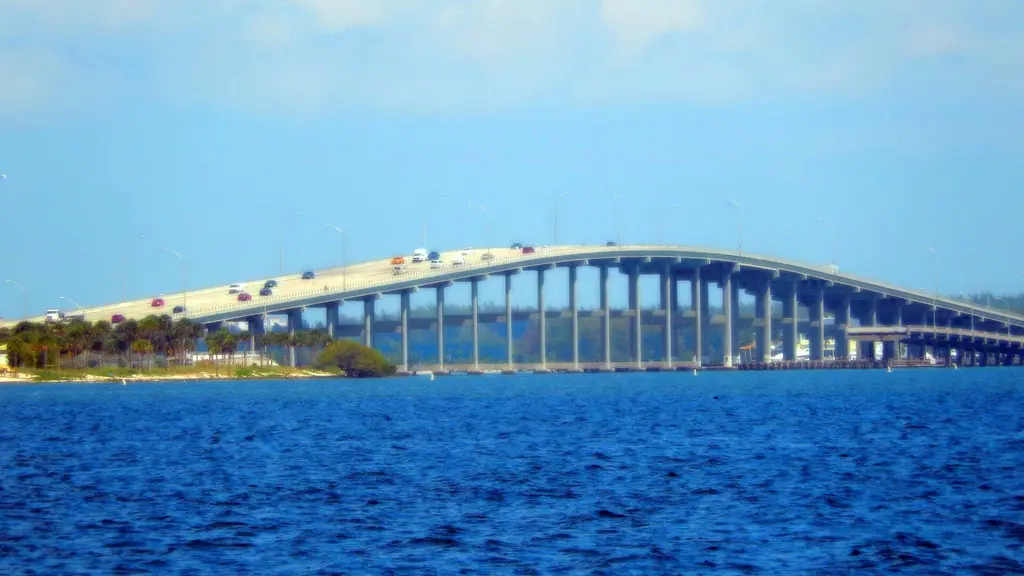
The Rickenbacker Causeway, a favorite route for training rides, became the focus of repeated safety campaigns.
2009 improvements. In January 2009, Miami-Dade County invited cyclists to a “Ride the Rickenbacker” event celebrating completed causeway and bike lane improvements, according to a county release reprinted by New Times.
2012 to 2014: the Aaron Cohen law. Cyclist Aaron Cohen was killed by a hit-and-run driver on the Rickenbacker in 2012, as CBS Miami reported during the 2014 legislative session. His death prompted a statewide campaign, and in 2014 the Legislature passed the Aaron Cohen Life Protection Act, approved by the governor on June 24, 2014, and effective July 1, 2014. The Florida Senate summary says it requires drivers in crashes causing serious bodily injury to remain at the scene and requires license revocation of at least three years for those convicted of leaving the scene of an injury crash.
2017: protected-lane concepts. The TPO’s 2017 plan described a community-driven proposal for a protected bike route and linear park over the causeway and noted that numerous cycling collisions had occurred there.
2022: immediate changes. After a fatal crash in May 2022, Mayor Daniella Levine Cava directed immediate measures, according to a June 2022 memo. Steps included removing a U-turn at the conflict point where two cyclist deaths had occurred and closing a vehicle access point across the bike lane.
The Underline: from a forgotten path to a park
The M-Path, a paved path under the Metrorail guideway, dates to 1983. For decades it was little known. According to a 2018 Rails-to-Trails Conservancy article published on the county’s website, the idea for The Underline came from Meg Daly, who broke both arms in a bike crash and began walking beneath Metrorail to physical therapy. A lifelong Miami resident, she had not known the path existed.
That personal discovery became a public project. Miami-Dade County opened The Underline’s first phase in 2021 and its second in 2024, and its own pages describe a 10-mile corridor when complete. The same 2018 article described a broader trail vision, the Miami LOOP, as a 225-mile network then about 54 percent complete.
Vision Zero becomes official policy
Advocates had long argued that traffic deaths are preventable. Miami-Dade’s Vision Zero page says the county’s first Vision Zero Plan was published by the Miami-Dade TPO in 2018, and that in 2021 Mayor Levine Cava and the County Commission formally established the Vision Zero Program. The county developed a Vision Zero Framework Plan in 2021 and a 2024 Action Plan, with a goal of ending traffic deaths and serious injuries by 2040. Our article on pedestrian safety in Miami looks at what that program measures and funds.
A timeline
| Year | Milestone |
|---|---|
| 1983 | M-Path built under Metrorail |
| 2007 | New groups form; two Critical Mass rides active |
| 2008 | Miami Bicycle Month, city bike committee, first Bike Miami (Nov. 9) |
| 2009 | Rickenbacker improvements celebrated; first City of Miami Bicycle Master Plan |
| 2012 | Aaron Cohen killed on the Rickenbacker |
| 2014 | Aaron Cohen Life Protection Act signed |
| 2016 | TransitCenter grant funds a county quick-build program |
| 2018 | Miami-Dade TPO publishes first Vision Zero Plan |
| 2021 | County Vision Zero Program established; Underline Phase 1 opens |
| 2022 | Emergency Rickenbacker safety measures |
| 2024 | Underline Phase 2 opens; county Vision Zero Action Plan |
| 2026 | City of Miami adopts updated Bike Master Plan |
For the infrastructure that came out of this history, see Miami’s cycling infrastructure, and browse more regional coverage in our Miami and South Florida section.
Key takeaways
- Miami’s bike movement grew from many small groups in 2007 and 2008, including Critical Mass rides, Emerge Miami and the Green Mobility Network advocacy group.
- City action in 2008, including Bike Miami open-streets days, helped lead to Miami’s first Bicycle Master Plan in 2009.
- Crashes on the Rickenbacker Causeway drove both state law (2014) and county safety changes (2022).
- The Underline began with one rider’s rediscovery of the M-Path and became a county project.
- Vision Zero moved from a 2018 TPO plan to an official county program in 2021, with a 2040 goal.
Questions readers ask
When did Critical Mass start in Miami?
Miami New Times reported in July 2007 that two separate Critical Mass rides were already operating in the Miami area. By 2013, CBS Miami described a ride on the last Friday of each month that drew more than 1,500 riders.
How did The Underline begin?
According to a 2018 Rails-to-Trails Conservancy article published by Miami-Dade County, the idea came from Meg Daly, who broke both arms in a bike crash, began walking the M-Path under Metrorail to physical therapy, and saw the corridor's potential as a park and trail.
Is this publication the Green Mobility Network advocacy group?
No. Green Mobility Network (greenmobilitynetwork.org) is an independent publication. A Miami-area advocacy group with the same name used this web address in earlier years; we are not that group and are not affiliated with it.
Sources
- Out of the Fiery Furnace of Miami, a New Group is Formed, Miami New Times (2007).
- Green Mobility is Finding Its Way, Miami New Times (2007).
- A New Day For Bikes In Miami?, Miami New Times (2008).
- We Like Bike!, Miami New Times (2008).
- Bike Miami: Car-Free Under the Palm Trees, Streetsblog New York City (2008).
- CS/CS/SB 102: Drivers Leaving the Scene of a Crash (Aaron Cohen Life Protection Act), The Florida Senate (2014).
- Protected Bike Lanes Demonstration Plan, Final Report, Miami-Dade TPO (2017).
- Florida's Miami LOOP: Bright Horizons (Rails to Trails magazine, hosted by Miami-Dade County), Rails-to-Trails Conservancy (2018).
- Implementation of Immediate Additional Cyclist Safety Measures along Rickenbacker Causeway, Office of the Mayor, Miami-Dade County (2022).
- Vision Zero, Miami-Dade County (2025).
Green Mobility Network is an independent publication. This article is for general information and is not legal, medical or professional advice; rules differ by state and city. Spotted an error? Read our corrections policy and write to contact@greenmobilitynetwork.org.