Common bicycle problems and their causes
Most bicycle problems announce themselves with a sound, a feel or a visible change. Learning to read those signs makes repairs simpler and riding safer.
Bicycles are simple machines, which makes most of their problems easy to diagnose once you know what to look for. A noise, a change in how the bike feels or something you can see usually points to a small number of likely causes.
This guide lists the most common problems everyday riders run into, what usually causes them, what you can reasonably do yourself and when a qualified mechanic should take over. If you are ever unsure whether a problem affects braking, steering or the frame, stop riding and get it checked. As the UCSB campus bike shop points out, small problems tend to get worse and more costly to fix the longer they are ignored.
Quick troubleshooting table
| Symptom | Likely causes | What you can do | See a mechanic if |
|---|---|---|---|
| Repeated flat tires | Debris left in the tire, low pressure, exposed spoke ends, worn tire | Find and remove the cause before fitting a new tube; keep tires at sidewall pressure | Flats continue after checking tire, rim tape and pressure |
| Tire goes soft over a few days | Slow leak, valve problem, normal air loss | Check pressure weekly, inspect valve, patch or replace tube | You cannot find the leak |
| Squealing brakes | Contaminated pads or rim, misaligned pads, worn pads | Clean braking surface, check alignment and pad wear | Squeal continues or braking is weak |
| Brake lever reaches the handlebar | Worn pads, cable stretch or slack, a hydraulic brake fault | Adjust cable tension with barrel adjuster on cable brakes | Hydraulic brakes, or adjustment does not fix it |
| Gears skip or hesitate | Cable stretch, misadjusted derailleur, worn chain or cogs, bent hanger | Fine-tune with the barrel adjuster; measure chain wear | Hanger may be bent or problem persists |
| Chain skips under hard pedaling | Worn chain or worn cogs | Measure the chain; replace if worn | New chain also skips |
| Noisy or squeaky chain | Dry, dirty or rusty chain | Clean and lubricate, wipe off excess | Noise persists after cleaning |
| Chain falls off | Limit screws out of adjustment, bent parts, chain too long | Check for obvious damage | It keeps happening |
| Wobbly wheel or brake rub | Wheel not seated straight, wheel out of true, loose or broken spoke | Reseat wheel in the dropouts and close quick release | Wheel stays out of true or a spoke is broken |
| Clicking or creaking | Loose bolts, dry contact points, loose crank, bearing wear | Check that bolts are secure to the torque in your manual | Noise continues or crank moves sideways |
| Loose or knocking steering | Headset adjustment or bearing wear | Do not ride until checked | Always |
Flat tires
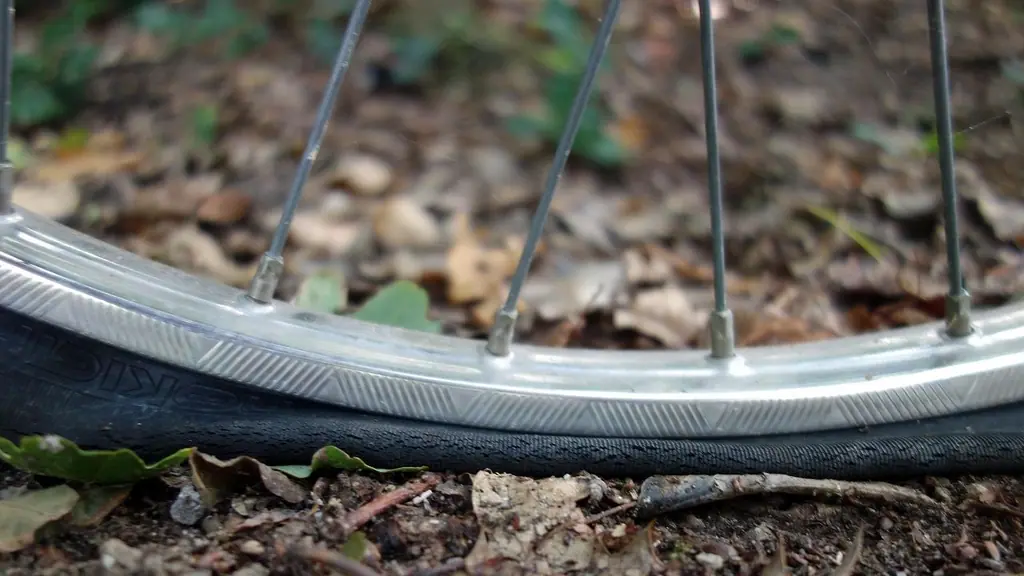
Flats are the most common roadside problem, and the most common mistake is fixing the tube without finding what caused the flat. The Wikibooks guide to fixing a flat lists the usual culprits:
- Sharp objects such as glass, thorns or wire cutting through the tread. These often stay embedded in the tire and puncture each new tube.
- Low pressure, which lets the tube get pinched against the rim on bumps and leaves a double cut known as a snakebite.
- Internal abrasion from spoke ends not covered by rim tape, a rubbing valve stem or debris inside the tire.
- Incorrect fitting, where the tube gets trapped under the tire bead during inflation.
- Valve problems, including a crooked valve or a clogged or leaking valve core.
Before fitting a new tube, run your fingers carefully around the inside of the tire to find anything sharp, check the casing for cuts or bulges and confirm the rim tape covers every spoke hole. Then add a little air, seat the tire evenly and make sure no tube is caught under the bead before inflating fully.
To prevent pinch flats, keep tires inflated to the range printed on the sidewall. The Cascade Bicycle Club notes that low pressure can cause a flat or even a fall.
Brake problems
Brakes deserve the most caution because a failure affects your ability to stop.
Squealing
Squeal is often caused by oil, dirt or residue on the braking surface or pads, or by pads that are misaligned. Cascade’s guidance notes that pads should line up with the rim when braking, and that clean, healthy, aligned rim brakes that still squeak may need a small adjustment called toe-in, where the leading edge of each pad sits slightly closer to the rim than the trailing edge, as described in the Wikibooks rim brake guide. Noisy or contaminated disc brakes are best checked by a mechanic.
Weak braking or a lever that pulls too far
Cascade suggests replacing rim brake pads when less than about 1/8 inch of pad remains and says there should be roughly an inch between the brake lever and the handlebar when braking hard. If the lever comes close to the bar, cable brakes usually need tension adjusted or pads replaced. Hydraulic brakes that feel spongy or inconsistent should be serviced by a mechanic.
Shifting problems
If the chain hesitates, skips between gears or will not settle in some cogs, the usual cause is cable tension. The Wikibooks rear derailleur guide explains that cables stretch with use, and that a barrel adjuster at the derailleur or shifter fine-tunes tension so each click moves the chain exactly one cog. Small quarter-turns, followed by a test shift through the gears, are the way to work.
Other causes include incorrect limit screw settings, which let the chain overshoot the smallest or largest cog, and a bent derailleur hanger, often after the bike falls on its drive side. A bent hanger misaligns the whole derailleur, and straightening or replacing it is best done by a mechanic with the right tool.
Chain problems
Noisy, squeaky or rusty chain
A squeaky chain is almost always dry or dirty. Wipe it clean, apply lubricant to the rollers, let it soak in and wipe off the excess. The Bicycle Coalition of Maine advises applying lube only to a clean chain and wiping off any excess before riding. Bowdoin College recommends the same treatment if the chain is noisy, rusty or dirty, or after extended rain rides.
Chain skipping under load
When the chain jumps or slips as you push hard on the pedals, wear is a likely cause. Chains lengthen as their pins and bushings wear. The Wikibooks chain wear guide describes measuring with a ruler: on a new chain a rivet lines up exactly with the 12-inch mark, and a chain whose rivet sits 1/8 inch or more past it should be replaced. The same guide notes that if a new chain then skips, the cassette or freewheel likely needs replacing, and if that does not solve it, the chainrings.
Wheel problems
If a wheel rubs the brakes right after you reinstall it, the simplest fix is to open the quick release or thru-axle, let the wheel settle fully into the dropouts and close it again. If the rim wobbles as it spins, the wheel is out of true. Truing requires a spoke wrench and patience, and a broken spoke means the wheel should be repaired before further riding.
Noises: clicks, creaks and knocks
Creaks and clicks can come from almost anywhere: pedals, crank bolts, the seat post, the saddle rails, the handlebar clamp or the bottom bracket. Start with the simple checks. Make sure bolts are secure, but follow the torque values in your owner’s manual, because the Bicycle Coalition of Maine warns that over-tightening can damage parts. Cascade suggests trying to move the crank arms sideways; any play means they need tightening or service.
Bowdoin’s guidance is a useful rule of thumb: a bike that makes a lot of noise, especially squeaking, or one that no longer functions properly, should go to a mechanic.
Prevention beats repair
Many of the problems above can be caught early with a one-minute pre-ride check and a regular maintenance routine. See our guides on bicycle safety checks before every ride and how often to service a bicycle. E-bike riders face some additional electrical and battery issues, covered in our guide to common electric bicycle problems.
Key takeaways
- Always find the cause of a flat before fitting a new tube, and keep tires at sidewall pressure to prevent pinch flats.
- Treat any loss of braking power or excessive lever travel as a stop-riding problem.
- Most shifting problems come from cable tension; small barrel adjuster turns often fix them.
- Chain skipping under load usually points to wear, so measure the chain rather than guess.
- When in doubt about brakes, steering, wheels or the frame, see a qualified mechanic.
Questions readers ask
Why does my new chain skip when the old one did not?
A worn chain can wear the rear cogs to match it. When a new chain meets those worn teeth, it may skip under load, and the cassette or freewheel, and sometimes the chainrings, may also need replacing.
Is it safe to ride with squeaky brakes?
A squeak alone is often a contamination or alignment issue, but test the brakes carefully. If stopping power is reduced, the pads are worn or the lever travels too far, do not ride until the brakes are fixed.
How can I tell a pinch flat from a puncture?
A pinch flat from low pressure typically leaves two small parallel cuts in the tube, sometimes called a snakebite. A puncture from glass or a thorn usually leaves a single hole that lines up with something in the tire.
Sources
- Bicycles/Maintenance and Repair/Wheels and Tires/Fixing a flat, Wikibooks.
- Bicycles/Maintenance and Repair/Chains/Checking chain wear, Wikibooks.
- Bicycles/Maintenance and Repair/Derailleurs/Rear Derailleur Adjustment, Wikibooks.
- ABC Quick Check, Cascade Bicycle Club.
- Bicycle Maintenance, Bowdoin College.
- Bike Maintenance, Bicycle Coalition of Maine.
- Bicycles/Maintenance and Repair/Brakes/Adjusting Rim Brakes, Wikibooks.
- Maintenance Tips, A.S. Bike Shop, University of California, Santa Barbara.
Green Mobility Network is an independent publication. This article is for general information and is not legal, medical or professional advice; rules differ by state and city. Spotted an error? Read our corrections policy and write to contact@greenmobilitynetwork.org.